Energy News Beat
May 29, 2026 The Philippines has received its first cargo of Iranian crude oil since the disruption of the Strait of Hormuz, marking a notable development in the country’s efforts to secure energy supplies amid ongoing global oil market volatility, according to tanker-tracking data from Kpler and Vortexa reported by Reuters, a Suezmax vessel carrying up to 1 million barrels departed from Iran’s Kharg Island in late March. It performed a ship-to-ship transfer offshore Singapore, with the receiving tanker delivering the cargo to the Bataan refinery in mid-May.
This shipment arrives as the Philippines—one of the Asian nations hardest hit by the Hormuz blockade—continues to grapple with supply challenges. Before the conflict, the country sourced approximately 98% of its crude oil from the Middle East. It declared a national energy emergency in mid-March due to fuel shortages, spiking prices, and inflationary pressures.
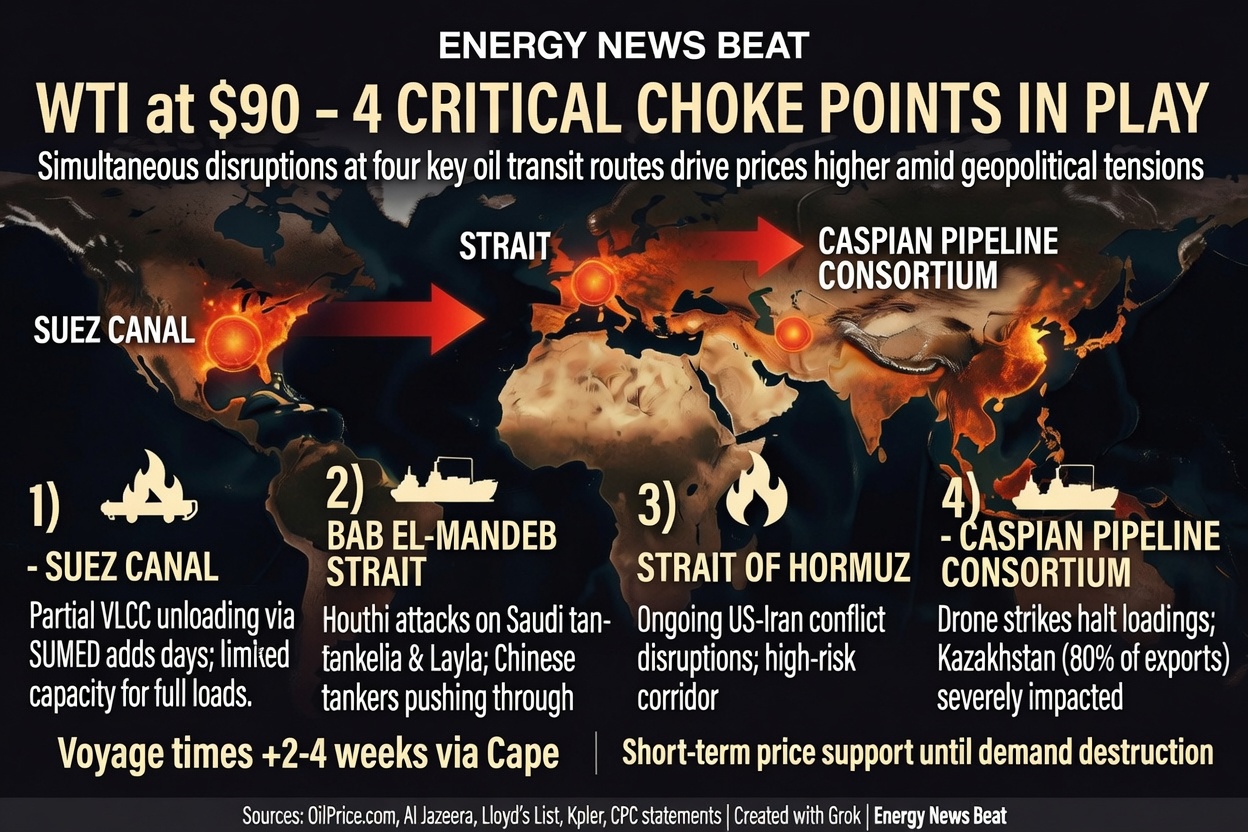
A U.S. Treasury general license issued in mid-March temporarily authorized imports of Iranian crude loaded by March 20, providing a narrow window for such transactions. Southeast Asian countries, including the Philippines, Indonesia, Malaysia, and Vietnam, have increasingly turned to alternative sources such as Russian oil amid temporary U.S. waivers.
Refineries in the Philippines:
The Philippines has limited domestic refining capacity. The Bataan Refinery (also known as Petron Bataan Refinery or PBR) in Limay, Bataan, operated by Petron Corporation (a subsidiary of San Miguel Corporation), is the country’s sole remaining operational oil refinery. It has a capacity of 180,000 barrels per day (bpd) and can supply roughly 35-40% of the nation’s fuel needs.
Historically, there were more facilities:
- Tabangao Refinery (Pilipinas Shell) in Batangas — permanently shut down around 2020 and converted into an import terminal.
- Earlier closures included Chevron’s Batangas refinery in 2003.
(Note: Broader industry databases may list dozens of smaller storage, blending, or distribution facilities, but crude oil refining is effectively consolidated at the single Petron site.) Key Companies for Investors. The downstream oil sector is dominated by a few major players, often referred to as the “Big Three” (though dynamics have shifted with refinery closures):
- Petron Corporation (PSE: PCOR) — Market leader, sole refiner, vertically integrated. Supplies a significant portion of domestic needs and operates extensively in retail. Owned substantially by San Miguel Corporation. Often seen as having strong upside from refining margins and fuel demand.
- Pilipipinas Shell Petroleum Corporation (PSE: SHLPH) — Major importer and retailer; exited refining but remains a key distributor.
- Other notable players include Chevron Philippines (Caltex), Phoenix Petroleum, Seaoil, Unioil, and smaller independents. The top companies collectively hold a large but not monopolistic share of the market, with importers filling much of the gap.
For investors, Petron stands out due to its refining monopoly position, exposure to crack spreads, and role in national supply security. However, the sector faces risks from import dependency, geopolitical volatility, regulatory changes, and the long-term shift toward renewables and electrification. Stocks in this space can be volatile with global oil prices.
Implications for Consumers
This Iranian cargo and broader diversification efforts (including Russian crude) could help stabilize supply and potentially ease some upward pressure on fuel prices in the short term. However, the Philippines remains highly vulnerable:
- Heavy reliance on imports (crude and products).
- Exposure to global price swings and shipping disruptions.
- Refining capacity covers only a fraction of demand, meaning most products are imported anyway.
Consumers, who have faced elevated pump prices amid the crisis, may see indirect benefits from restored flows if they translate to lower or more stable retail prices. Long-term, energy security initiatives like the ASEAN petroleum security pact aim to build resilience through sharing and stockpiling.
Annual Fuel Consumption
The Philippines consumes roughly 470,000–490,000 barrels per day of oil products in recent data (around 2024 figures).
Breakdown estimates (approximate, varying by source and year):
- Diesel — Dominant fuel, with daily consumption around 32–33 million liters (heavily used in transport, industry, and power). Annual: Roughly 11–12 billion liters.
- Gasoline — Around 19–25 million liters per day. Annual: Roughly 7–9 billion liters.
- Jet fuel (Aviation) — Significantly lower; peaked near 2.8 billion liters in 2019 pre-pandemic. Recent daily averages around 35,000+ barrels per day equivalent in broader data, though exact annuals fluctuate with air travel recovery.
Transport is the largest consuming sector. These figures underscore the country’s diesel-heavy economy and vulnerability to supply shocks.
This first Iranian cargo since the blockade signals adaptive sourcing but highlights the urgent need for diversified supplies, strategic reserves, and investment in refining or alternative energies to shield the economy and consumers from future disruptions.
Appendix: Sources and Links
- OilPrice.com original article: https://oilprice.com/Latest-Energy-News/World-News/Philippines-Receives-First-Iranian-Crude-Cargo-Since-Hormuz-Blockade.html
- Wikipedia & industry data on refineries: https://en.wikipedia.org/wiki/List_of_oil_refineries and the Bataan Refinery page.
- Petron Corporation: https://www.petron.com/
- DOE and consumption stats via CEIC, Statista, Worldometers, and Philippine sources.
- Additional context from Reuters (via OilPrice) and the Philippine government reports on imports and emergency declarations.
This article is for informational purposes. Energy markets are dynamic; consult professional advisors for investment decisions.
The post Philippines Receives First Iranian Crude Cargo Since Hormuz Blockade appeared first on Energy News Beat.