Energy News Beat
Europe is facing a perfect storm in the summer of 2026: record early heatwaves clashing with the structural weaknesses of aggressive Net Zero policies. The EU and UK have systematically dismantled reliable baseload power from coal, nuclear, and natural gas, replacing it with intermittent wind and solar—without sufficient storage or flexible backup.
The result? Some of the world’s highest electricity prices, grid strain, and heightened vulnerability to weather extremes.
Heatwave Exposes Fragile System
An intense early summer heatwave across Europe, with record temperatures in Germany and France, has amplified existing problems. Low water levels in the Rhine River—the continent’s vital inland shipping artery—have restricted barge traffic, driving up costs for coal, diesel, and other fuels by more than 50% in recent weeks.
In France, warm river temperatures forced nuclear reactors to cut output by 6.4 GW (roughly 14% of daily power demand) due to cooling water restrictions. Despite this, France continued exporting power, but such deratings are becoming more common amid longer, hotter summers.
Meanwhile, air conditioning demand has surged, straining a system already short on dispatchable capacity.
Net Zero Policies: Baseload Replaced by Intermittency
EU and UK Net Zero strategies (EU Green Deal, REPowerEU, UK Clean Power 2030 targets) prioritized rapid decarbonization.
This led to:
Coal phase-outs:
The UK closed its last coal plant in 2024; the EU coal share fell to a historic low of 9.2% in 2025.
Nuclear reductions:
Germany completed its phase-out; aging fleets elsewhere face outages.
Gas as bridge fuel: Still used heavily for balancing, but politically constrained.
EU electricity mix in 2025 (latest full-year data from Ember):
Wind + Solar: 30% (wind 17%, solar 13% — a record)
Fossil fuels: 29% (coal 9.2%, gas ~15-17%)
Nuclear: ~23-25%
Total renewables (incl. hydro, biomass): ~48%
UK 2025 mix:Renewables: 52.5% (wind 30%, solar ~7%)
Low-carbon total: ~65%
Gas: ~31-32%
Nuclear: down to ~12% (due to outages)
Wind and solar now often exceed fossils in many EU countries, but their intermittency creates gaps. When wind drops or demand spikes (as in heatwaves), gas ramps up—or prices explode. Battery storage is growing rapidly (Europe added record capacity in 2025, with total storage exceeding 100 GW, including pumped hydro), but it remains insufficient relative to renewable buildout. The EU had only about 3% battery-to-wind/solar capacity ratio in 2025, projected to reach 12% by 2030.
Highest Electricity Prices in the World
Europe now boasts some of the globe’s most expensive residential electricity. Taxes, levies (including renewable subsidies), and grid upgrade costs are major drivers.
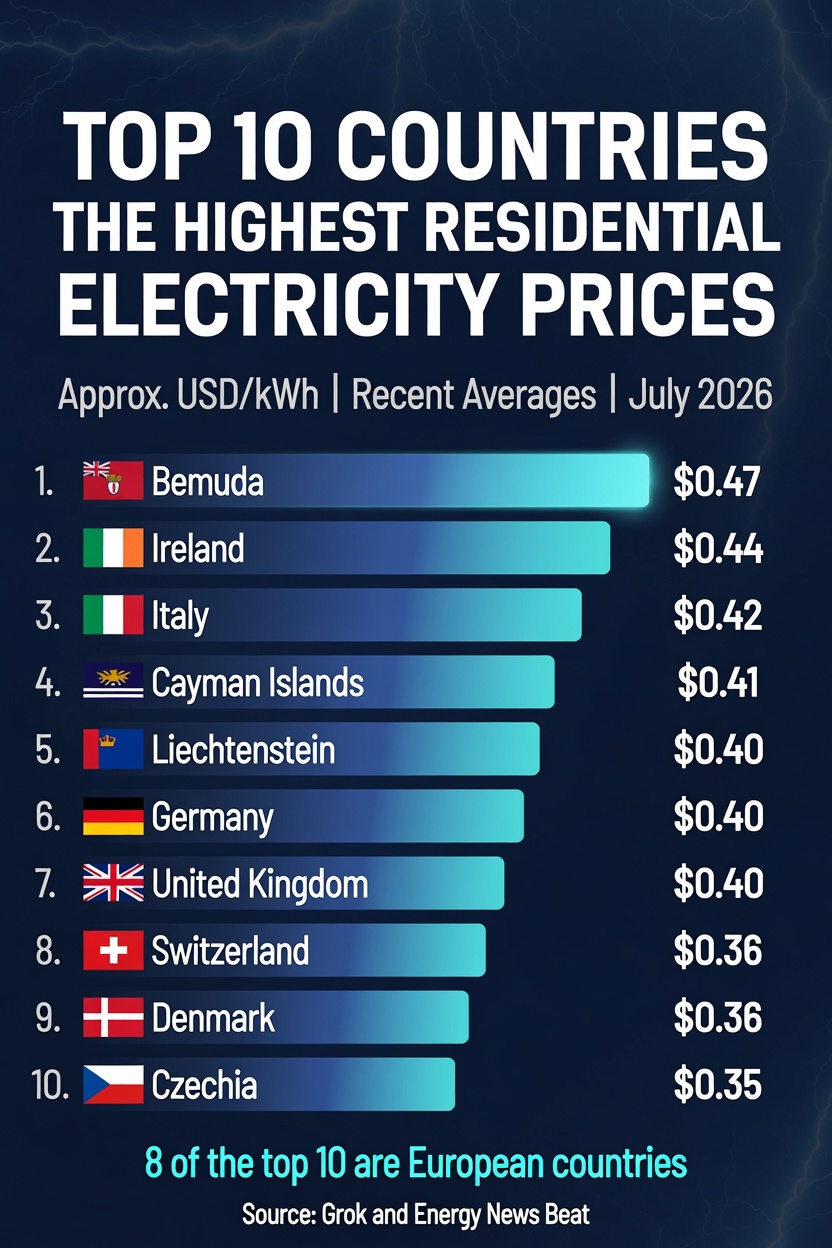
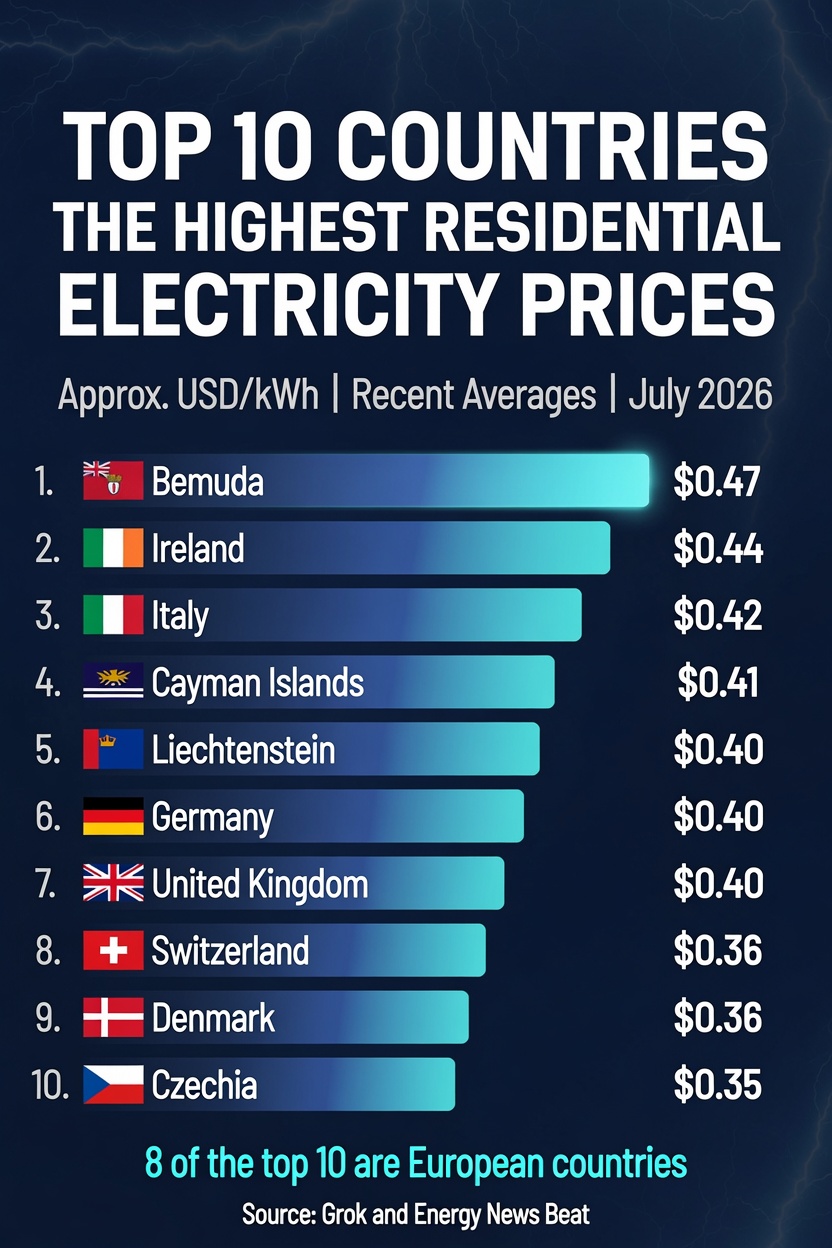
Top 10 countries with the highest residential electricity prices (approx. USD/kWh, recent averages):
Bermuda — $0.47
Ireland — $0.44
Italy — $0.42
Cayman Islands — $0.41
Liechtenstein — $0.41
Germany — $0.40
United Kingdom — $0.40
Switzerland — $0.36
Denmark — $0.36
Czechia — $0.35
Eight of the top 10 are European. Europe’s regional average (~$0.26/kWh) far exceeds Asia (~$0.09) or the global average (~$0.17).
Germany and the UK exemplify the trend: high renewable penetration plus transition costs (subsidies, networks) have pushed household bills among the highest for major economies.
Subsidies Being Cut — They Can’t Be Afforded
Germany is slashing renewable support. A draft law published July 18, 2026, overhauls the EEG (Renewable Energy Sources Act). From 2027, new renewable generators must receive support that “benefits both the market and the system”—rewarding projects aligned with demand and avoiding grid congestion.
The driver: a solar surge overwhelming grids, causing congestion and the need for costly interventions. Fiscal pressures make sustained high subsidies unaffordable. Similar rethinkings are emerging elsewhere as costs mount.
The Unfolding Crisis
Net Zero policies delivered rapid renewable growth but at the expense of system reliability and affordability. Intermittent sources without adequate storage or baseload backup create volatility. Heatwaves expose the gaps: nuclear deratings, transport disruptions, and backup reliance on gas.
The EU and UK now pay some of the world’s highest electricity prices while facing recurring supply stresses. Cutting subsidies signals the limits of the current approach—renewables alone cannot yet provide the firm, affordable power modern economies need.
The Energy Realities Podcast will cover this Monday Morning at 7:00 am Central US.
Appendix: Sources and Links
- OilPrice.com: “Europe’s Heatwave Is Becoming an Energy Crisis” (July 18, 2026) — https://oilprice.com/Energy/Energy-General/Europes-Heatwave-Is-Becoming-an-Energy-Crisis.html
- Bloomberg: “Germany to Slash Renewable Subsidies as Solar Surge Tests Grids” (July 18, 2026) — https://www.bloomberg.com/news/articles/2026-07-18/germany-to-slash-renewable-subsidies-as-solar-surge-tests-grids
- Ember: European Electricity Review 2026 — https://ember-energy.org/latest-insights/european-electricity-review-2026/
- Ember: Wind and solar generated more power than fossil fuels in the EU for the first time in 2025 — https://ember-energy.org/latest-updates/wind-and-solar-generated-more-power-than-fossil-fuels-in-the-eu-for-the-first-time-in-2025/
- UK Department for Energy Security and Net Zero / Modern Power Systems reporting on 2025 UK mix
- GlobalPetrolPrices.com / World Population Review / Visual Capitalist electricity price rankings (2026 data)
- Additional supporting data from ENTSO-E, LowCarbonPower.org, and energy-charts.info (2025-2026 generation figures)
This crisis is not theoretical—it is unfolding now. Balanced policy that values reliability alongside decarbonization will be essential going forward.
The post Net Zero and the Heat Wave Are an Energy Crisis in Europe Unfolding – Live Podcast Monday 7:00 am appeared first on Energy News Beat.