Energy News Beat
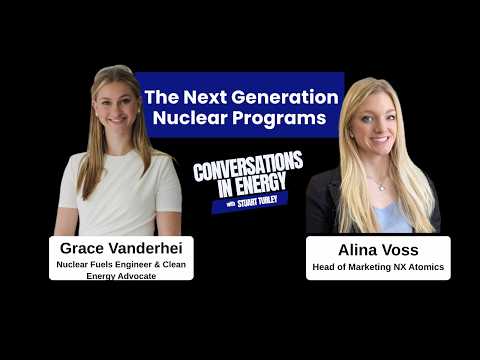
A wildly fun podcast with Grace Vanderhei and Alina Voss.
In this Energy Newsbeat podcast episode, host Stu Turley sits down with nuclear experts Grace Vanderheide (nuclear fuels engineer and former Miss America) and Alina Voss (NX Atomics) to explore the nuclear industry’s pivotal moment. As the U.S. restarts decommissioned reactors and deploys advanced reactor designs, the conversation reveals that nuclear’s future hinges not on engineering breakthroughs alone, but on solving the unsexy realities: grid infrastructure, ratepayer affordability, and honest public communication.
From passive safety mechanisms to manufacturing innovation, the speakers tackle misconceptions about nuclear while confronting hard truths about cost discipline, transmission bottlenecks, and the need to engage women and younger generations in the energy transition.
Here is Grace’s LinkedIn: https://www.linkedin.com/in/gracevanderhei/
Here is Alina’s LinkedIn: https://www.linkedin.com/in/alinavoss/
1. Nuclear Fleet Expansion & Reactor Restarts
The conversation highlights the restart of decommissioned reactors (Three Mile Island, Palisades, Dwayne Arnold) and power upgrades to existing plants. Grace explains that power upgrades alone could generate the equivalent of about seven new nuclear reactors over 2-5 years—a cost-effective way to increase energy output without building new facilities.
2. Grid Infrastructure & Transmission Crisis
A critical theme is the neglected state of America’s transmission and distribution infrastructure, which is 20 years behind in many regions. Alina emphasizes that transmission has been “completely slept on” and warns that without grid upgrades, new generation capacity (whether nuclear or data centers) will face the same challenges. The grid is the “missing middle” that most Americans don’t understand.
3. Ratepayer Concerns & Energy Affordability
Both speakers stress that public fear isn’t primarily about nuclear safety anymore—it’s about electricity costs. They discuss how data centers and new energy projects risk being blamed for rate increases, and how the nuclear industry must avoid the same PR pitfalls by being transparent about costs and protecting consumers from project overruns.
4. Net Zero Targets vs. Reality
Grace and Alina critique net zero marketing as disconnected from actual energy policy. They argue that closing nuclear plants while pursuing net zero targets is contradictory, and that voluntary blackouts/brownouts represent a failure of grid planning rather than a solution. They advocate for maximizing clean energy generation rather than reducing consumption.
5. Advanced Nuclear Fuel & Technology
Grace discusses accident-tolerant fuel (ATF) and high-assay, low-enriched uranium (HALEU), explaining how 90-95% of spent nuclear fuel is reusable. Alina describes NX Atomics’ liquid metal-cooled reactors and passive safety features, emphasizing innovation in manufacturing (3D printing) and financing models.
6. Passive Safety & Reactor Design
Both experts explain passive safety mechanisms—how reactors automatically shut down without human intervention or external power (using gravity to drop control rods). This addresses public misconceptions about nuclear accidents.
7. Small Modular Reactors (SMRs) & Manufacturing
The discussion highlights SMRs as a manufacturing challenge, not just an engineering one. Alina notes that companies like Allo Atomics are building factories alongside reactors to achieve economies of scale. The key is treating nuclear as a manufacturing game, not just an engineering project.
8. Construction Cost & Timeline Discipline
Grace emphasizes that the #1 priority for nuclear expansion is delivering projects on time and on budget. She argues that nuclear engineers’ perfectionism culture conflicts with business realities, and that construction specialists—not engineers—should lead builds once designs are finalized.
9. Workforce & Gender Diversity
Grace highlights the quadrupling of nuclear engineering undergrad enrollment (from 14 to 60+ students per class at UW-Madison). She stresses the need to engage women in nuclear, noting that women are often unaware nuclear is clean energy and need clearer messaging about its value proposition.
10. Public Perception & Communication Strategy
Both speakers discuss how to communicate nuclear’s benefits authentically, especially as AI-generated social media content proliferates. They emphasize the need for human-to-human interaction and authentic storytelling to build trust, particularly with younger generations and women.
11. Uranium Supply Chain
Grace expresses interest in the global uranium supply chain and how it will evolve with nuclear expansion—a critical but underexplored topic.
12. Political & Policy Support
The conversation touches on positive momentum from policymakers (like Energy Secretary Chris Wright) and the need for intentional policy to protect ratepayers and avoid the mistakes made with data centers.
This was an absolute blast, and honestly it is great to see young people taking the reins and running after nuclear. We need all the power we can get, and the future is bright with nuclear enthusiasts like Grace and Alina. Thank you both for your leadership and stopping by the podcast – Stu
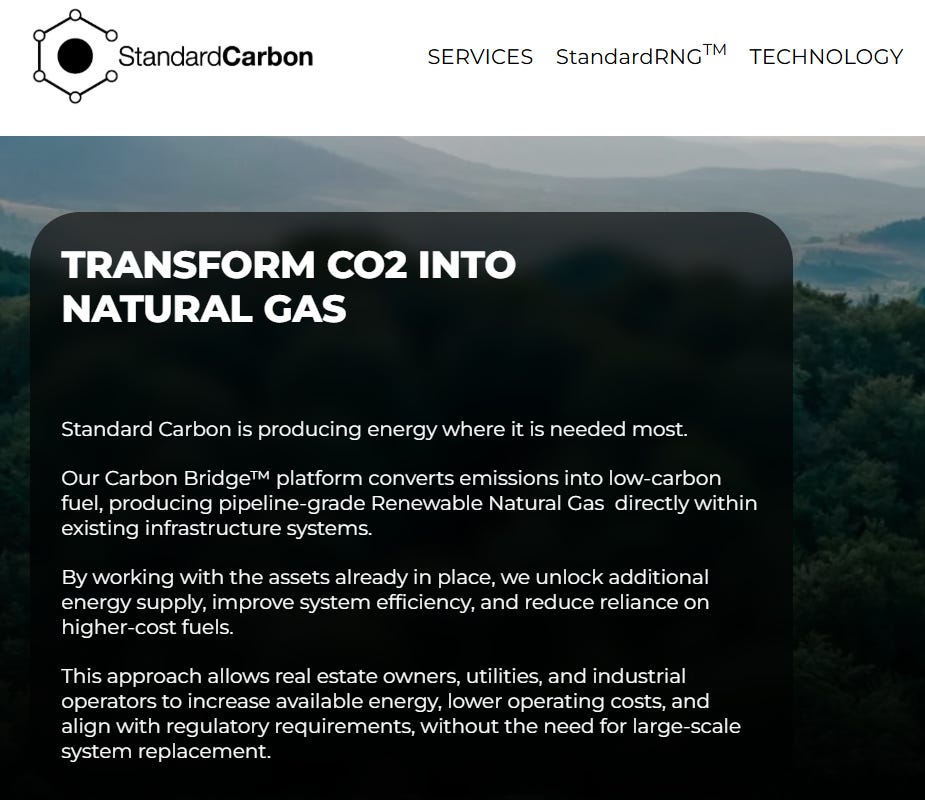
Later today I am visiting with Natan Shahar, Founder & Chief Strategy Officer, Standard Carbon, about a new company that can transform CO2 into natural gas at scale. This is very cool and has several huge use cases.

A shout-out to Steve Reese and the Reese Energy Consulting group for sponsoring the Podcast.
https://reeseenergyconsulting.com/.

Data2 if you have any business systems, can you trust A? Well, they have the patent on validation. . https://data2.zoholandingpage.com/energy
And we have WellDatabase rolling in as a new sponsor.
https://welldatabase.com/
The post The Next Generation of Nuclear Energy: A Conversation on Growth, Grid Reality, and Public Trust appeared first on Energy News Beat.