
Energy News Beat
ENB Pub Note: This is a great article from America Outloud with Mike Ariza and Ronald Stein, and both have been on the Energy News Beat podcast. We recommend connecting with both great resources.
An energy “REALITY” reminder is that crude oil by itself is useless black tar, unless you build a multi-billion-dollar refinery to break it down to produce various types of transportation fuels, and oil derivatives that are the basis of the products in our materialistic world.
Without refineries to manufacture that useless black tar that we call crude oil into usable transportation fuels and oil derivatives that are the basis of more than 6,000 products in our daily lives, we’re back to the 1800’s.
Why are the California “users” of the products and transportation fuels made from crude oil, and the politicians who hate the guts of in-state refineries, want to drive them out of business?
- Since 2023, California Crude Oil Refining Capacity has dropped by 35%.
- Crude oil production capacity in California is in terminal decline, resulting in the State importing from foreign countries more than 60% of the crude oil demands of in-State refineries.
- Even now, given the amount of transportation fuels that California is importing from foreign countries, the State continues its vulnerability level of being a National Security Risk to America.
Refineries are the supply chain source of those products and transportation fuels made from crude oil that have allowed the world to sustain 10 times more people today (8.3 billion) than at the start of the Industrial Revolution, approximately 700 to 800 million people in 1750.

There’s something wrong with this picture to rid the world of the suppliers of the products demanded by the economy, as the products from refined crude oil, in addition to supporting more than 8 billion people on this planet, have helped hospitals, doctors, and medications, to extend life longevity from 40 to 75+ during those few centuries since 1750.
California’s in-state refining capacity for transportation fuels continues to diminish:
- Two refineries have converted over to manufacturing renewable diesel. In these cases,
350,000 barrels of crude oil processing per day have dropped offline. They no longer
produce gasoline or jet fuel of any volume. - Within the last seven months, California policies have driven two other refineries, Phillips
66 in Wilmington and Valero in Benicia to shut down operations and leave the State.
The closure of 2 refineries in California has increased the total transportation fuels of gasoline, jet fuel, and diesel needing to be imported from Asian refineries. This has made California vulnerable to many scenarios that could quickly generate supply shocks or shortages for the entire USA. Some of these scenarios include Port problems, weather issues, unscheduled refinery downtimes, or a significant global event.
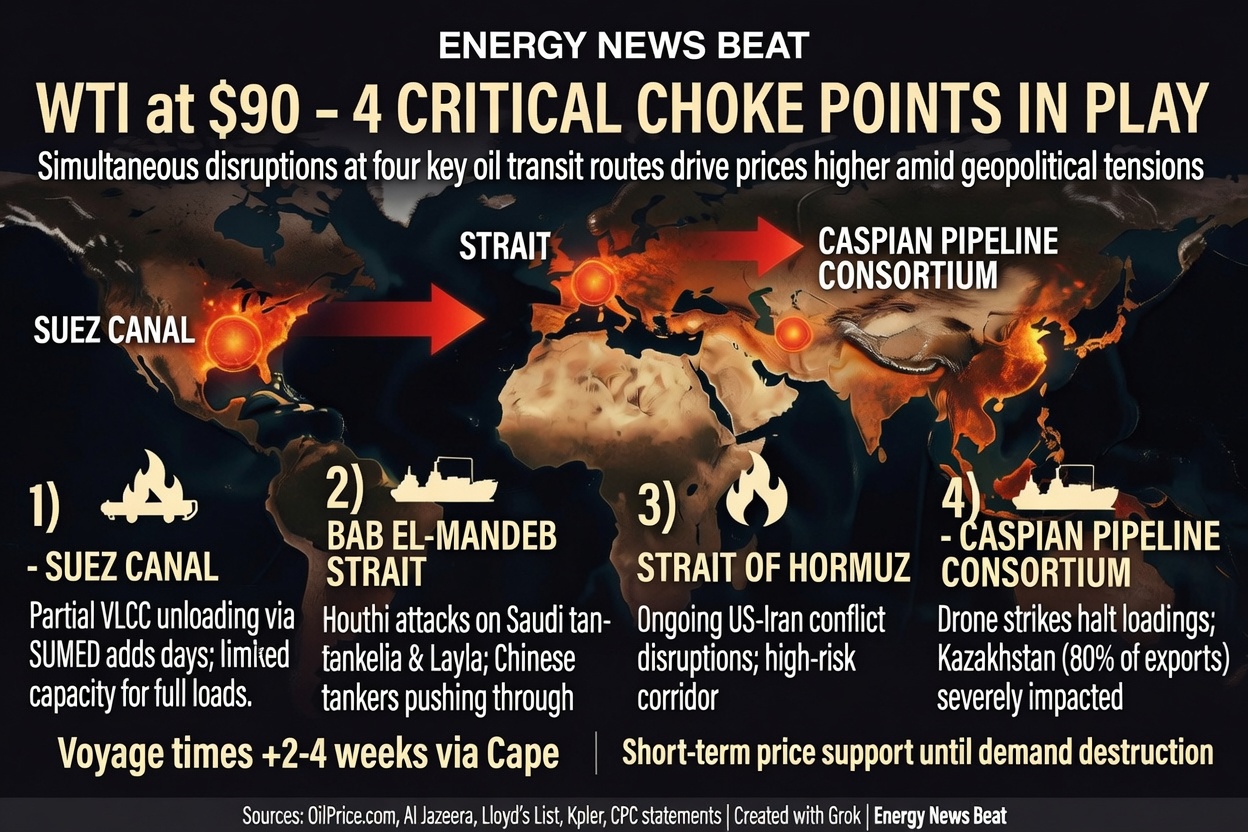
- In the case of the Iranian war, that vulnerability has never been so clear.
- Due to the closure of the Strait of Hormuz, crude oil supplies to Asian refineries have dropped off dramatically.
- Asian refineries have been forced to cut back their crude oil charge rates. This forced them, as of late March, to suspend shipments of gasoline, jet fuel, and diesel that they had been supplying California.
California’s policies are forcing the hands of Chevron, PBF, and Marathon, the three remaining oil corporations in California. Together, they own six of the remaining seven operational refineries in the state. Between February 26th of 2026, and March 9th, these companies did something unprecedented by dispatching three letters to the Governor and the state air board. While they have some varied details, they are all very specific on two points:
- The air board has a brand new cap and invest amendments that they will be voting on at the end of May.
- These amendments, if adopted, will result in huge fee increases for all three corporations. If the state will not sit down and negotiate with these corporations on these newly proposed amendments, then they will all look at shutting down their refineries and leaving the state.
If this happens, then the famine will not be knocking on the door; it will be kicking it in. Cities have a three to five-day supply of food on hand. Even now, we are at a vulnerability level in which this is possible.
Here are two questions for the California “users” of the products made from processed crude oil:
- Are the “users” blaming refineries for humans living longer and healthier lives because of the medical industry that did not exist a few centuries ago?
- Are the “users” blaming refineries for virtually eliminating weather-related fatalities that require a combination of advanced prediction techniques, proactive infrastructure planning, and community preparedness?
The world is not dependent on natural fossil fuels, as no one uses “raw” crude oil that is only black tar, BUT has become dependent on the products and transportation fuels MADE FROM oil, the same products and transportation fuels that Wind and Solar CANNOT make!
Today, we’re a materialistic society. Wind turbines and solar panels ONLY generate electricity, but CANNOT make any of the products or transportation fuels that get made from fossil fuels that support:
- Hospitals
- Airports
- Militaries
- Medical equipment
- Telecommunications
- Communications systems
- Space programs
- Appliances
- Electronics
- Sanitation systems
- Heating and ventilating
- Transportation – vehicles, rail, ocean, and air
- Construction – roads and buildings
Nearly Half the World’s Population Relies on Synthetic Fertilizers Made from Fossil Fuels
Discussing crude oil alone, too often consultants, educators, politicians, and also many industrial leaders CANNOT explain how the more than 350,000 wind turbines, and an estimated 3.5 to 5 billion individual solar panels in the world will make the following transportation fuels:
- Bunker fuel, to support over 112,500 commercial and merchant ships globally.
- Jet fuel supports an estimated 30,000 commercial aircraft in the world.
- Gasoline fuel: Worldwide gasoline consumption hovers around 300 billion gallons annually.
- Diesel fuel: Global diesel usage is approaching 400 billion gallons annually.
Transportation fuel demands continue to grow to support jet fuel for planes, bunker fuel for ships, diesel fuel for trucks, and gasoline fuel for cars.
Energy-dense fuels like coal, oil, and natural gas – demonized as sources of carbon dioxide – remain the backbone of food distribution, especially in the developed world. They fuel irrigation pumps, fertilizer plants, delivery fleets, farm machinery, and refrigeration. Remove these energy inputs, and granaries would shrink. Famine would no longer be a relic of history; it would be knocking at the door.
With California having the 4th-largest economy in the world, the two refinery shutdowns resulted in an additional loss of nearly 300,000 barrels per day of state crude oil refining capacity. If the six remaining refineries in the State go down, the ports of Los Angeles, Long Beach, and Oakland will go down. Logistics will collapse. The supply chain of the products and transportation fuels MADE from oil will grind to a halt. Within a few short weeks, cities will be out of food. This will have a cascading effect in Nevada and Arizona.
If three of the busiest ports in America are in fact shut down, it is quite possible that food shortages could reach deep into America. California continues to be the supply chain source of the products and transportation fuels demanded by citizens of the State, and others in America that depend on that supply chain.
Please share this information with teachers, students, and friends to encourage Energy Literacy conversations at the family dinner table.
Click this Link to Sign up for Energy Literacy from Ronald Stein.


The post Modern society runs on refined oil products. Can California keep ignoring reality? appeared first on Energy News Beat.