
Energy News Beat
It was a wild day on the Energy News Beat News desk today, and we have John Rich getting into the AI and Data Center rumble in Georgia Power. We love John Rich, and when we saw that he was jumping into the mix, we had to find out what was going on.
This is a huge story in the United States, and I am getting some bad feelings about the amount of water and eminent domain tricks that are starting to be pulled. Get involved locally, and keep us posted.
1. Georgia Power & Data Centers
The episode opens with a major story about Georgia Power using eminent domain to acquire land for high-voltage transmission lines to support data center electricity demand. About 21 homes are affected. Country music artist John Rich publicly called for action on May 12th. Georgia Power approved a $16 billion plan for nearly 10 gigawatts of new generation capacity, with 90% earmarked for data centers. The host raises concerns about environmental impact and water consumption.
2. Strait of Hormuz Crisis
A significant geopolitical tension where the Islamic Revolutionary Guard Corps (IRGC) controls this vital waterway through which 20% of global oil and gas flows. President Trump has rejected Iran’s latest proposal. The host questions why insurance companies like Chubb haven’t stepped in to escort tankers, noting that without insurance, ship captains won’t move.
3. Asian LNG Markets & Coal Revival
Japan is boosting coal production as an emergency measure to conserve LNG and ensure stable power. The host contrasts Japan’s pragmatic approach with Germany’s decision to shut down nuclear plants and coal facilities—calling Germany’s strategy misguided.
4. Australia’s Oil Security
Australia faces potential $200 oil prices in a doomsday scenario. The country is fast-tracking the Tartoom oil field (first major new field in 50 years) to secure local oil supply and keep refineries operational.
5. U.S. Strategic Petroleum Reserve (SPR) Release
The Trump administration is releasing up to 172 million barrels from the SPR in coordinated action with the IEA (roughly 400 million barrels total from other nations). The host praises the loan-based approach, which requires replenishment at a 1.5:1 ratio.
6. China’s Teapot Refineries
Independent Chinese refineries in Shandong Province are slashing production due to the Strait of Hormuz crisis. These government-controlled facilities must maintain production even at a loss.
7. Saudi Aramco’s Market Rebalancing
Saudi Aramco CEO Amanda Nessier states global energy markets won’t fully normalize until 2027. The company emphasizes the need to restore supply-demand equilibrium, rebuild depleted inventories, and end demand destruction.
8. Oil Exploration Boom
Global oil and gas exploration is accelerating due to the supply crisis. Companies like ExxonMobil and SLB are prioritizing energy security and national resource development.
9. California Refinery Crisis
California faces a national security risk with only 7 refineries remaining and 6 slated to close. The state is isolated from other states with no pipeline connections, creating an energy vulnerability.
10. Preparedness & Community Resilience
The host concludes with advice on personal preparedness—stocking food, water, medication, and alternate power sources—and emphasizes the importance of community self-sufficiency and local involvement.
The overarching theme is global energy security challenges driven by geopolitical tensions, supply disruptions, and the growing demand from data centers.
1.What is Going On with Georgia Power and Data Centers?
A viral X post from @WallStreetApes on May 11, 2026, has spotlighted a growing tension in rural Georgia: the use of eminent domain by Georgia Power to acquire land and easements for high-voltage transmission lines. The lines are needed to support surging electricity demand, much of it from new hyperscale data centers driven by the AI boom. The post features a resident whose childhood home in Coweta County is at risk, with over 330 private properties affected. Georgia Power states it will first negotiate purchases and easements, but will pursue eminent domain if necessary to “strengthen the grid” for the state’s growing energy needs.
The controversy centers on Project Sail, a proposed 829-acre hyperscale data center campus (reportedly involving Prologis/Atlas, with plans for up to 9 buildings and hundreds of megawatts of capacity). Local residents rezoned the rural conservation land to industrial use in a narrow 3-2 county vote and are now suing, citing concerns over property rights, water use, and long-term impacts. Similar disputes have arisen nearby, including in Fayette County, where high-tension power poles have been proposed near homes.
Country music star John Rich (@johnrich) quickly got involved. On May 12, he publicly called on Rep. Brian Jack (R-GA), who represents the affected area, to address the situation in Newnan/Coweta County. Rich highlighted the irony in the Newnan mayor’s bio, which emphasizes protecting neighborhoods, and urged direct outreach. Rich has a track record of advocating for landowners against what he sees as overreach by energy companies and government entities, previously encouraging reports of land grabs to the USDA. Locals had tagged him directly, referencing his past help in Tennessee against a TVA methane plant.
Georgia Power’s Big Bet on Data Centers
This isn’t an isolated incident. In December 2025, the Georgia Public Service Commission (PSC) unanimously approved Georgia Power’s plan to add nearly 10 gigawatts (GW) of new generating capacity—mostly natural gas combined-cycle plants, battery storage, solar pairings, and power purchase agreements—at an estimated cost of $16 billion over the next five years. Georgia Power says ~90% of the new power is earmarked for data centers. Environmental groups, including the Southern Environmental Law Center, Sierra Club, and Georgia Interfaith Power & Light, have sued the PSC, arguing the approval lacked a proper demonstration of need and could saddle residential customers with massive costs if data center demand doesn’t fully materialize.
Georgia already hosts dozens of data centers, with the pipeline exploding in recent years thanks to land availability, tax incentives (now under review), and relatively competitive power rates. Recent deals include major Amazon investments. Georgia Power has also rolled out programs allowing large customers like data centers to procure their own clean energy additions to the grid.
The National Data Center Boom: Power, Water, and Local Impacts
The Georgia story is part of a nationwide surge. The U.S. leads globally with over 3,000–4,000 operational data centers and hundreds more under construction or in advanced planning stages (e.g., 302 under construction as of early 2026 data, with major pipelines in Texas, Virginia, and emerging “frontier” markets).
Power Consumption: U.S. data centers consumed about 176 terawatt-hours (TWh) in 2023—roughly 4.4% of total U.S. electricity. Projections show this nearly doubling to 150 GW of demand by 2028 (or higher in some forecasts), potentially reaching 6.7–12% of national electricity use. Hyperscale facilities can draw as much continuous power as tens or hundreds of thousands of homes. Data centers drove about half of U.S. electricity demand growth in 2025.
Water Usage: Cooling is the hidden thirst. A typical mid-sized data center uses 300,000 gallons per day; large hyperscale ones can consume 1–5 million gallons daily (equivalent to a small town). North American data centers used nearly 1 trillion liters (264 billion gallons) in 2025. By 2028–2030, projections show annual water demand comparable to major cities, with two-thirds of recent builds in high water-stress areas. This includes direct evaporative cooling and indirect use from power generation. Many facilities claim “closed-loop” systems, but real-world losses and peak demands still strain local rivers, aquifers, and treatment plants.
Patterns of Disruption to Homes and Water Sources:
Land & Homes: Rural and suburban areas see farmland or residential properties rezoned or taken via eminent domain for data centers, substations, or transmission lines. Residents report construction traffic, noise, visual blight (giant poles in yards), and fears of declining property values.
Water Sources: Competition with households, agriculture, and ecosystems leads to well pressure drops, higher bills, or drought exacerbation in stressed regions (e.g., Southwest, parts of the Southeast). Contamination or discharge concerns have surfaced in some Georgia cases.
Grid & Rates: Utilities build new plants and lines; costs may be socialized if forecasts miss. Environmental groups warn that fossil-fuel reliance is increasing emissions.
Broader Backlash: At least 16 major projects were blocked or delayed in 2025 due to community opposition. States are considering moratoriums, transparency rules, and water-use caps.
What Can Consumers and the Administration Do?
Consumers and Local Residents: Attend and comment at PSC/utility hearings.
Support or file lawsuits challenging eminent domain (must prove “public use” and just compensation) or inadequate environmental review.
Contact state legislators for stronger data-center siting rules, rate protections, and water disclosure requirements.
Report land issues via channels like the USDA land-use reporting portal (as John Rich has promoted).
Push for data centers to fund their own dedicated power and water infrastructure rather than relying on public grids.
The Administration (Federal and State): Increase transparency: The U.S. Energy Information Administration is piloting mandatory data-center power-use surveys in high-impact states—expanding this nationwide would help.
2.As Diplomacy Falters, Who Will Blink First and Next Steps?
The next few weeks are going to tell us how this unfolds.
3.Top Asian LNG Markets Boost Coal Use as Iran War Limits Supply
The Teapot refineries do not create gasoline, diesel, or jet fuel for California, so their cutting back won’t impact the West Coast.
4.Australia Doomsday Scenario Sees Oil Hit $200 on War Escalation
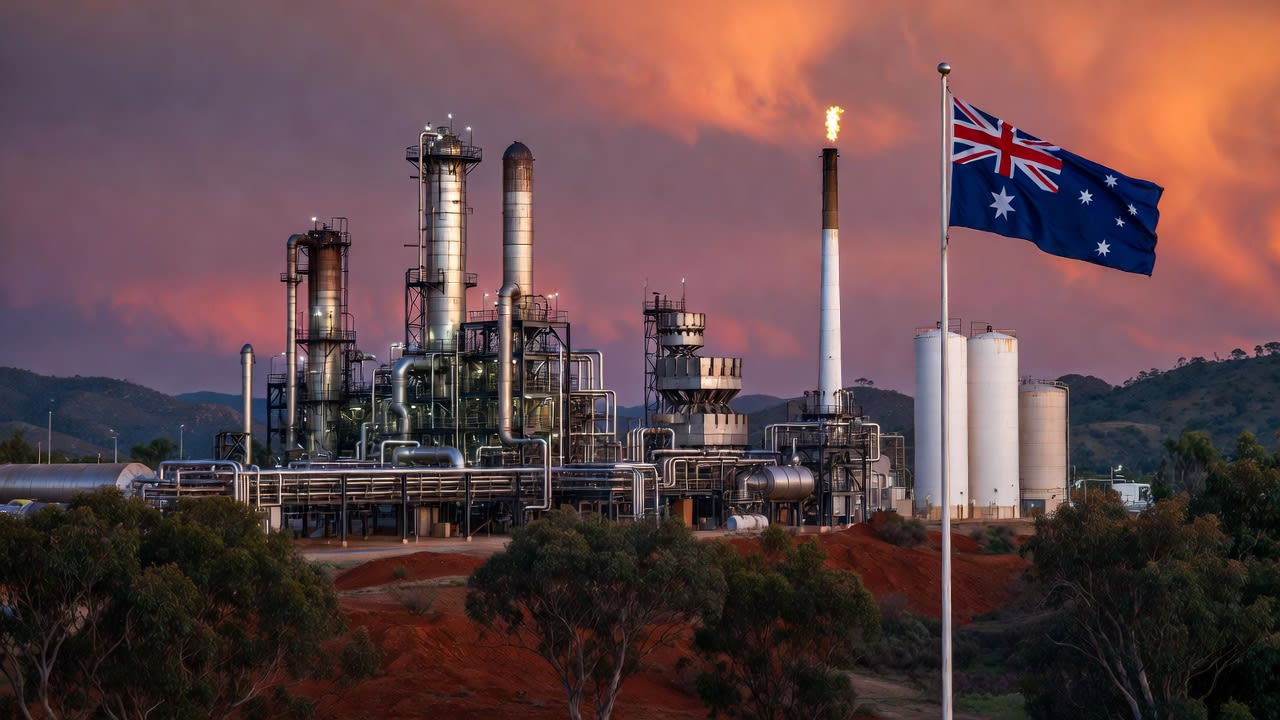
Australia’s own Treasury has run the numbers on a nightmare escalation of the Iran conflict — and the result is a doomsday scenario that would send global oil prices to $200 a barrel, throw the world economy into chaos, and expose just how fragile Australia’s energy position has become.
In its annual budget papers released Tuesday, Treasurer Jim Chalmers’ department laid out the worst-case outlook: a protracted war or further damage to Middle East energy infrastructure and Red Sea shipping routes that cuts off a huge chunk of global oil supply. For Australia — already reeling from months of fuel shortages triggered by the same conflict — this isn’t abstract modeling. It’s a direct threat to the nation’s ability to keep planes in the air, trucks on the roads, and farms operating.
Why Australia Is the World’s Weakest Link in This Crisis
Australia stands out as one of the most exposed developed economies when it comes to liquid fuel security.
Here’s why:
Only two refineries are left. Once home to eight major facilities, Australia now operates just two: Ampol’s Lytton refinery in Brisbane (≈110,000 b/d) and Viva Energy’s Geelong refinery in Victoria (≈120,000 b/d). Together they supply roughly 20% of national demand. The rest — about 80-90% of diesel, gasoline, and jet fuel — is imported.
Heavy reliance on imported refined products. In 2025, Australia imported roughly 850,000 barrels per day of finished fuels, primarily from Singapore, South Korea, Malaysia, and other Asian hubs. Domestic crude production (≈320,000 b/d) is mostly light condensate that the remaining refineries aren’t configured to process efficiently, forcing even more crude imports.
Dangerously low stockpiles. Strategic fuel reserves hover around 30-37 days for key products — far below the International Energy Agency’s 90-day standard. Recent government figures showed ≈36 days of petrol, 34 days of diesel, and 32 days of jet fuel before the latest disruptions.
Decades of energy policy focused on rapid refinery closures, renewable targets, and environmental restrictions on fossil-fuel development have left the country structurally dependent on foreign supply chains that are now under extreme stress. As the conflict in the Middle East has already shown, even minor disruptions in Asia-Pacific refining or shipping send immediate price spikes and shortages to Australian cities and regional areas.
“Energy Security Starts at Home” — A Cardinal Rule Being Ignored
Energy News Beat Podcast host Stu Turley has repeatedly hammered this point home: “Energy Security Starts at home, and Energy Dominance comes through your exports.” It’s a simple, cardinal rule that every national leader should apply when thinking about their constituents. Australia’s experience proves the cost of ignoring it.
When global supply chains tighten, countries without domestic refining and production capacity pay the highest price — in higher fuel costs, agricultural disruption, mining slowdowns, and aviation constraints.
Are They Finally Increasing Domestic Drilling?
The crisis is prompting some movement — but it’s late and still incremental:
Queensland’s Crisafulli Government is actively fast-tracking the Taroom Trough, positioning it as Australia’s first major new oilfield in 50 years. Companies like Omega Oil & Gas, Beach Energy, and others are drilling or preparing campaigns, with state support for infrastructure.
New South Wales issued its first gas exploration permits in a decade in April 2026. Offshore tenders in the Otway and Gippsland basins have resumed after a seven-year gap.
The federal government is reportedly in talks with energy companies about building a new $10 billion refinery to boost domestic capacity.
Exploration interest has “stirred back from the dead” in places like the Officer Basin, but years of hardline environmental policies, fracking bans in some states, and regulatory delays mean any new production is still years away from meaningfully reducing import dependence.
The Bottom Line
Australia’s Treasury scenario isn’t science fiction — it’s a plausible extension of the crisis already playing out. With oil potentially hitting $200 and global supply chains fracturing further, the country’s low refining capacity, import-heavy model, and thin stockpiles turn what should be a manageable price shock into a national security and economic emergency.
5.Trump Administration Releases More SPR Oil to Help Oil Market and Consumers
6.China’s Teapot Refiners Slash Output as Hormuz Crisis Crushes Margins
8.Global Supply Shock Reignites Oil Exploration Boom
9.The California refinery crisis is a national security risk for America
The following is from Ronald Stein on America Outloud, and we recommend following and subscribing!
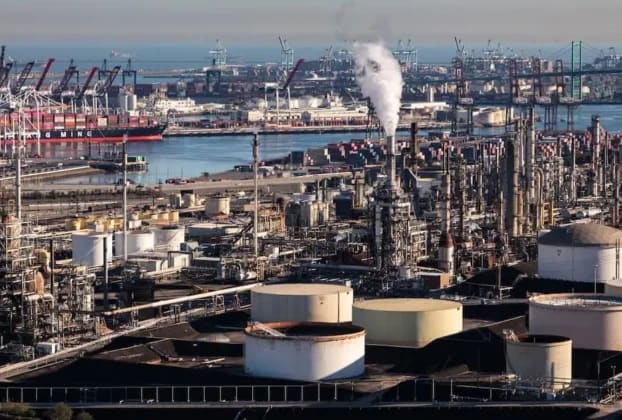
California is the 4th largest economy in the world and an “ENERGY ISLAND that is isolated from the other 49 States by the Sierra Mountains. There are no pipelines over those majestic mountains to connect the State to the rest of the country. Thus, California’s in-State refineries have been producing ALL the transportation fuels demanded on the California “Energy Island.”
- Bunker fuel, about 1 million barrels ANNUALLY for the ships servicing three of the busiest Ports in America, located in California.
- Port of Los Angeles had more than 1,800 vessel arrivals in 2024, which includes cruise and merchant ships.
- Port of Long Beach handled over 9.6 million container units in 2024, indicating a very high volume of ship activity, plus cruise ships.
- Port of Oakland, which also handles significant cargo volumes, contributes to the total number of cruise and merchant ships needing fuel.
- Jet fuel: California has over 2,400 airports and aviation facilities, including 9 international airports and 30 major military airports. The demand is 13 million gallons of aviation fuel DAILY. Several of those airports have direct pipelines to local refineries. In 2019, California consumed 16.7% of the national total of jet fuel, making it the largest consumer of jet fuel in America.
- Gasoline: For its 30 million vehicles, California is the second-largest consumer of motor gasoline among the 50 states, consuming 42 million gallons DAILY of gasoline, just behind Texas.
- Diesel: Diesel fuel is the second largest transportation fuel used in California, consuming 10 million gallons DAILY of diesel to support the state’s trucking of products from 3 of the busiest shipping ports in America.
California’s regulatory environment has created a refining capacity vacuum that global markets are rushing to fill, as regional policy decisions are creating international market opportunities and reshaping geopolitical energy dynamics. We recommend following Ronald Stein and subscribing to his news letter. Sign up for Energy Literacy from Ronald Stein.
Check out the Energy News Beat Show Notes at https://energynewsbeat.com/


A shout-out to Steve Reese and the Reese Energy Consulting group for sponsoring the Podcast https://reeseenergyconsulting.com/.

Data2 if you have any business systems, can you trust A? Well, they have the patent on validation. . https://data2.zoholandingpage.com/energy
And we have WellDatabase rolling in as a new sponsor.
The post What is going on with Georgia Power, and why is John Rich getting involved? appeared first on Energy News Beat.