
Energy News Beat
Crude oil inventories held at storage facilities in Cushing, Oklahoma, fell below 20 million barrels during the week ending June 19 until the week ending July 10, according to our Weekly Petroleum Status Report.
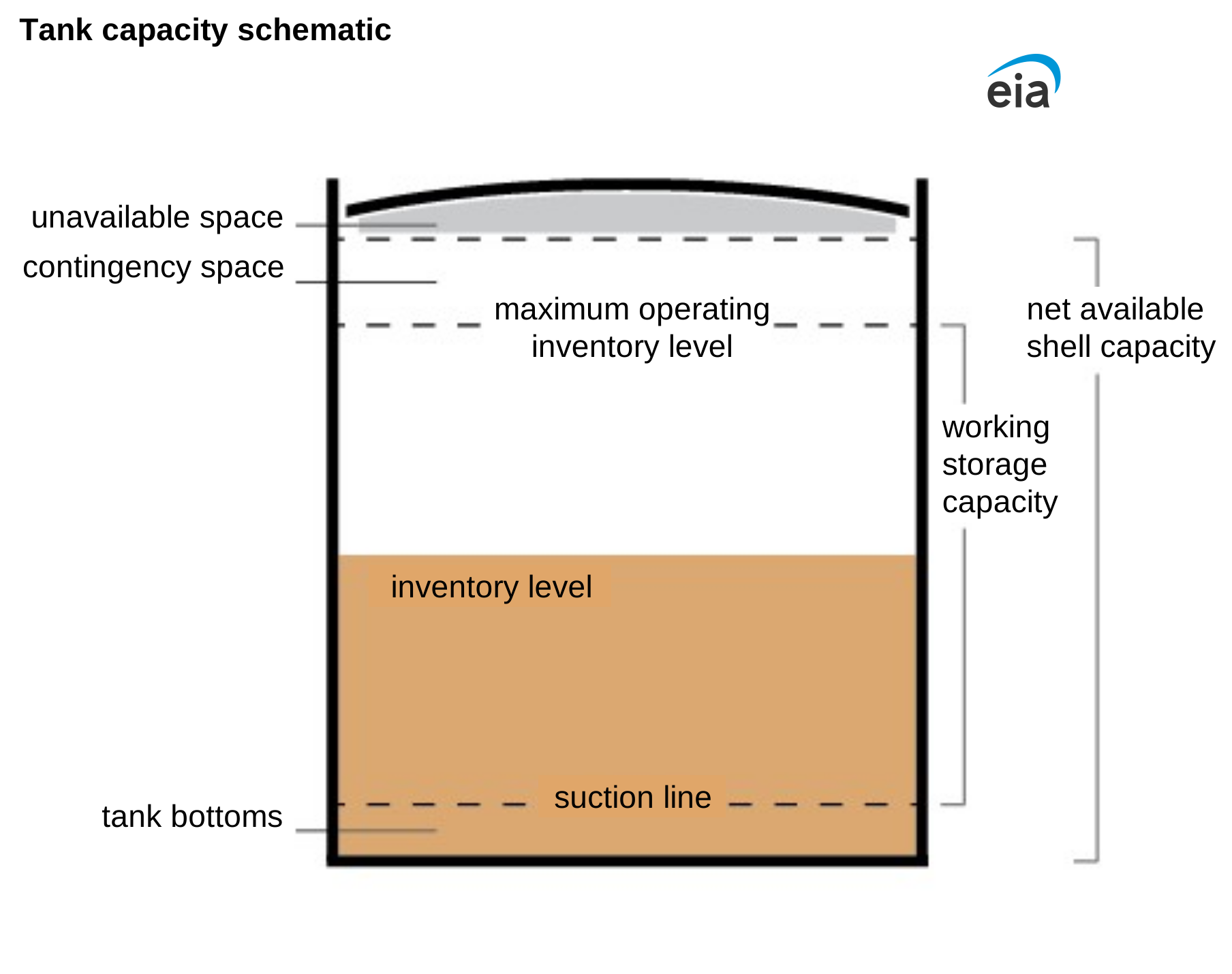
Storage facilities for crude oil and petroleum products require a minimum volume of product in their tanks and pipe infrastructure to remain operational, which can vary between different storage facilities or tank systems. If storage levels fall below their minimum volume, pump suction can become ineffective and storage facilities cannot function. These minimum volumes are sometimes called tank bottoms.
Tank bottoms are a part of what distinguishes working storage capacity from shell capacity. Shell capacity, in general, refers to the total volume of material that might be held in a given storage facility by design. Working storage capacity, on the other hand, refers to the maximum safe fill volume of storage available, minus the tank bottom capacity. EIA is currently reviewing the results of a pilot study to better understand the minimum working inventory levels at select petroleum inventory facilities.
In mid-June when storage at Cushing fell below 20 million barrels, the spot price differential between international benchmark Brent crude oil and U.S. benchmark West Texas Intermediate (WTI) priced at Cushing fell just below $0 dollars per barrel. The five-day rolling average differential became negative from June 18 to June 24, and again from July 2 through July 8. The negative differential occurred as the WTI-Cushing price increased above the Brent spot market price, putting the spread at its lowest point since January 2022. The relatively high WTI-Cushing price suggests that recent low inventory levels may be near tank bottom levels, contributing to extreme tightness for Cushing storage operators and the mid-Continent crude oil market.
Storage facilities must generally operate within their working storage capacity limitations, which prevents inventories of crude oil and other products from truly falling to zero under normal conditions. This means that not every barrel of crude oil or petroleum in inventories is necessarily accessible. In extreme cases, an inventory facility may be unable to provide a product even though it is not technically empty, because it is effectively at the bottom of its working storage capacity.
Principal contributor: Kevin Hack
The post What are tank bottoms? appeared first on Energy News Beat.