Energy News Beat
The warnings are flashing red. On May 18, 2026, HFI Research published a stark analysis titled “(WCTW) The Oil Market Has Reached The Point Of No Return.” It argues that logistical realities, inventory collapses, and geopolitical anchoring have locked the market into deeper pain — far beyond the optimistic assumptions of Wall Street sellside analysts from JPMorgan, Goldman Sachs, and Morgan Stanley, who are betting the Strait of Hormuz reopens in June with prices holding around $100 through year-end.
A related post on X by @Mark4XX amplified the message, calling it a “MUST READ” and highlighting how every passing day without resolution raises the probability of sustained chaos.
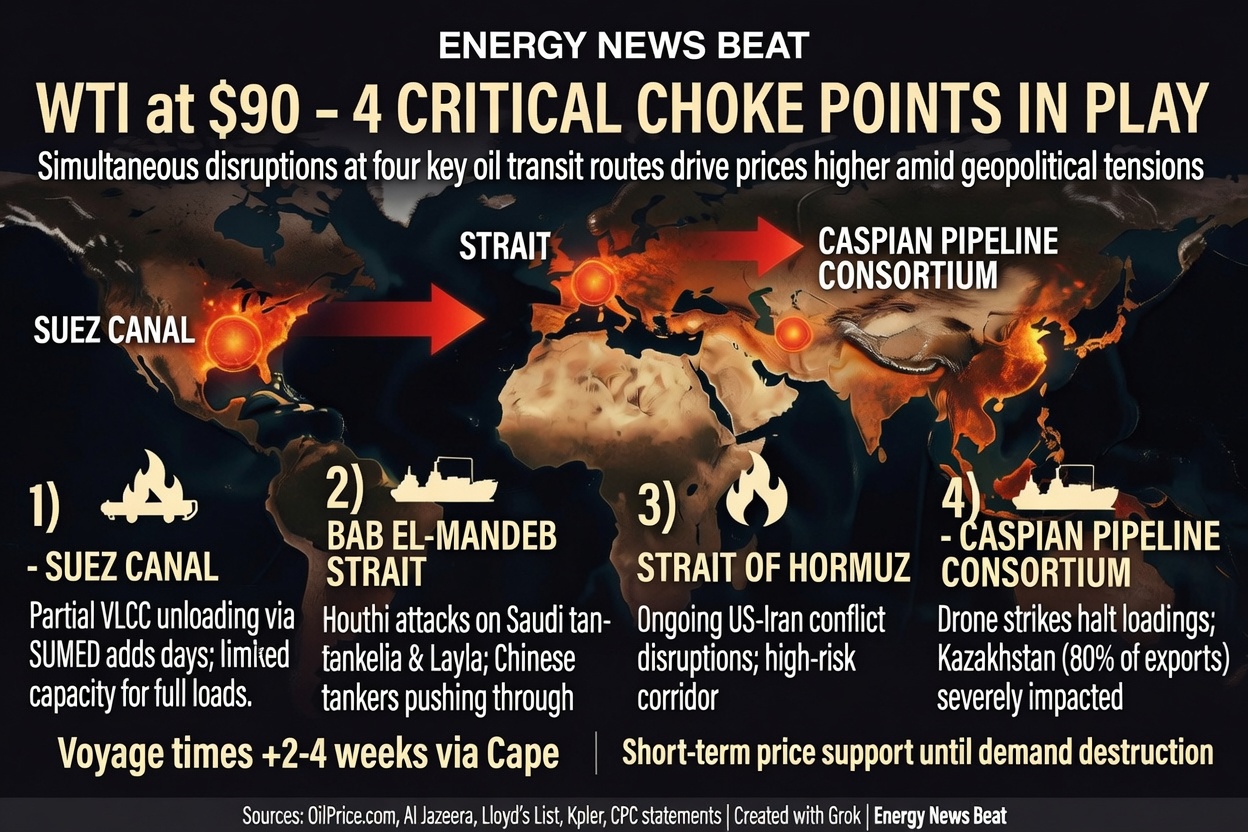
We are not in a normal oil shock. This is the largest supply disruption in history, triggered by the Iran War that escalated in late February 2026. Iran declared the Strait of Hormuz closed around March 4. While a small number of tankers have “dribbled through,” the overall impact on free flow remains minimal. The question is no longer if we feel the pain, but how severe it becomes in the coming weeks — and whether demand destruction arrives fast enough to prevent a broader economic cliff.
The Current Reality: A Dribble, Not a Flow
Recent data confirms the user’s observation. According to Bloomberg reporting on May 18, at least 19 large non-Iranian oil and LPG tankers have successfully entered and exited the Strait since March 1. However, roughly 100 such tankers that were already in the Persian Gulf before the conflict remain stuck, fearing attacks.
Overall, marine traffic has dropped dramatically, with at times near-zero open transits in recent periods.
This is not restoring a meaningful supply. Pre-war daily transits were around 138 vessels. The “dribble” is symbolic at best and has had a negligible impact on easing the global supply crunch.
The HFI Research “Point of No Return” Thesis
HFI Research lays out a sobering math problem:
May implied oil flow: A brutal negative 7.5 million barrels per day. This comes from ~12 million b/d in production shut-ins, ~2 million b/d demand loss, and ~2.5 million b/d from Strategic Petroleum Reserve releases.
Logistics nightmare: Even if a diplomatic deal magically appears by June 1, most ballast tankers are already en route to or draining excess crude in the US. The round-trip time back to the Persian Gulf means production cannot realistically restart until August at the earliest.
Anchoring bias: The US cannot easily walk away without appearing strategically defeated. Iran, having already absorbed costs, is positioned to outlast. Every day without resolution increases the chance there will never be a quick one.
Sellside fallacy: Wall Street models assume a June reopening because inventories “will hit tank bottom.” This may work for underwriting energy stocks but fails for real price forecasting when physical constraints dominate.
The core conclusion: We have crossed the point of no return. Quick-fix assumptions are wishful thinking. A rude awakening awaits those still pricing in normality.
Who Gets Hit Hardest in the Next Few Weeks?
If the conflict is not de-escalated and reliable free flow through the Strait is not restored, the pain will be geographically uneven but globally felt. Asia stands at the epicenter.
Asia (Highest Exposure):
Japan (~70-73% of oil imports via Hormuz), South Korea (~65-70%), India (~40-50%), and China (~40-45%) dominate flows through the chokepoint.
These nations also rely heavily on Qatari and UAE LNG (roughly 20% of global LNG trade transits Hormuz, with the vast majority heading to Asia).
The next few weeks’ impact: Accelerating energy shortages or extreme price spikes, refinery curtailments, power generation stress (especially LNG-dependent grids), industrial slowdowns, and imported inflation. India and China face particular pressure on growth and currency stability. Japan and South Korea, with high dependence and limited immediate alternatives, could see the sharpest near-term disruptions.
Europe: Secondary but painful. Qatar supplies ~10-11% of EU LNG imports via Hormuz. European natural gas futures have already surged 50%+ to one-year highs in spots. Higher global oil and gas prices compound existing pressures.
United States:
Direct import dependence is low (~2-5%). Higher prices benefit domestic producers. However, gasoline has risen (reports of nationwide levels above $4/gallon in some contexts), inflation ticks up, and global recession risks weigh on everything from exports to consumer spending. SPR releases have provided a buffer, but are not infinite. The U.S. West Coast, led by California’s Gavin Newsom, is the weak link.
Gulf Producers & Broader Middle East:
Shut-in production and full storage hurt revenues (except where strategic positioning applies). Any infrastructure damage adds long-term repair costs.
Global South / Developing Nations:
Most vulnerable to second-order effects: higher food and fertilizer costs (via energy and transport), energy poverty, and balance-of-payments stress.
In short, Asia feels it first and hardest in the immediate weeks ahead. The rest of the world follows through price channels and potential demand destruction spillover.
When Does Demand Destruction Kick In?
It is already underway — and accelerating.
The IEA has described this as triggering the sharpest drop in global oil demand since COVID-19, reversing earlier growth forecasts. HFI Research factors in ~2 million b/d of demand loss already.
Timeline expectations:Near-term (now through June): Demand loss intensifies as prices stay elevated and scarcity bites. Steepest inventory draws are projected for May and June.
Summer onward: Behavioral and economic responses compound — reduced driving, industrial throttling, efficiency measures, and potential recessionary effects. Historical oil shocks show demand destruction often lags price spikes by weeks to months, but becomes self-reinforcing once it starts.
Sustained prices well above $100 (currently Brent in the $104–112 range, WTI ~$98–108, with recent spikes) make destruction more likely and deeper.
The “billion-barrel shock” is now heading toward broader demand destruction. This is both a safety valve and a signal of economic stress.
What Are Analysts Saying Now?
Oil: Sellside consensus (JPM, Goldman, Morgan Stanley, HSBC): Strait reopens in June; Brent averages around $95–$100+ for 2026 in base cases, with some upward revisions. They emphasize inventory pressure, forcing a resolution.
IEA and others: Market flipped into deficit. Steep draws in Q2. Prices remain elevated.
Contrarians (HFI Research et al.): The logistics and anchoring make a clean June resolution unrealistic. Deeper and more prolonged pain is the base case they model.
LNG / Natural Gas:
Severe disruption. Qatar (~20% of global LNG) and UAE exports are effectively offline or heavily constrained. Prices have surged in Asia and Europe. The global LNG supply wave is delayed by years. Asia bears the brunt; Europe feels secondary waves.
Gold and Silver:
Paradoxically mixed. Geopolitical risk and inflation hedging should support them, yet prices have faced headwinds from a stronger US dollar (oil/inflation dynamics) and shifting rate-cut expectations. Gold hit records earlier but pulled back significantly (reports of 20%+ declines from peaks in some periods) despite the war. Silver has shown similar volatility. They remain long-term hedges but have not followed the classic “war premium” script this time due to dollar and yield pressures.
The Precipice: Are We There?
We are approaching it rapidly. The combination of physical logistics locking in delays, steep inventory draws, minimal effective tanker relief, and geopolitical anchoring creates a dangerous feedback loop.
If the Strait does not see a reliable, sustained free flow soon, Asia’s energy security erodes first, global demand destruction deepens, and the risk of a broader stagflationary or recessionary shock rises.
The HFI Research warning is not alarmism — it is a clear-eyed assessment of constraints that optimistic models are ignoring. Sellside assumptions may hold for equity underwriting but are failing the physical market test.
The path forward requires urgent diplomacy to restore safe passage and de-escalate. Energy markets do not negotiate; they ration through price and shortage. The longer this drags, the ruder the awakening.
For now, watch tanker movements, inventory reports, Asian demand signals, and any credible ceasefire progress. The clock is ticking louder than many on Wall Street appear to hear.
Appendix: Sources and Links
- HFI Research: “(WCTW) The Oil Market Has Reached The Point Of No Return” (May 18, 2026) — https://www.hfir.com/p/wctw-the-oil-market-has-reached-the
- X Post by@Mark4XX amplifying HFI Research (May 19, 2026) — https://x.com/Mark4XX/status/2056635378841321571
Key Supporting Sources:
- Bloomberg: “Tankers Entering Hormuz During Iran War Are Making Their Way Out” (May 18, 2026)
- Reuters, CNBC, IEA reports, and analyst notes on oil/LNG deficits and prices (various May 2026)
- EIA and other data on Hormuz dependence (Japan, South Korea, India, China shares)
- Reports on LNG disruption (Qatar ~20% global supply impact)
- Gold/silver price analysis noting dollar and yield pressures amid conflict
Additional context drawn from contemporaneous reporting on the Iran War timeline, tanker tracking, and market forecasts as of mid-May 2026.Energy News Beat Channel — Delivering unfiltered energy truth. This article reflects a synthesis of public sources for informational purposes. Markets move fast; always verify the latest data.
The post The Oil Point of No Return? Are We Approaching the Precipice? appeared first on Energy News Beat.