Energy News Beat
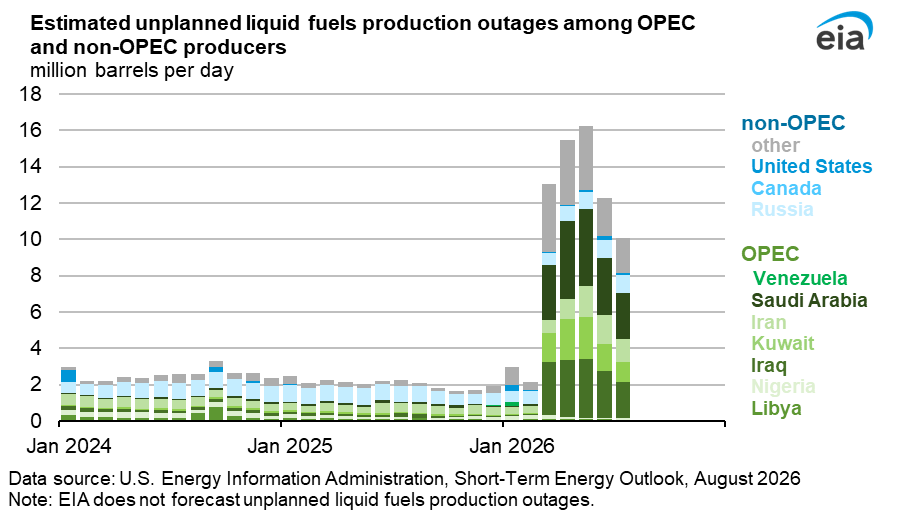
The 2026 Strait of Hormuz crisis—sparked by U.S.-Israeli operations against Iran beginning in late February and marked by Iranian attacks on shipping, assertions of control, U.S. naval responses and blockades, and sharply reduced tanker traffic—has delivered the largest oil supply disruption on record. At its peak, the effective closure or severe constriction of the waterway, which normally carries roughly 20-25% of global seaborne oil and about 19-20% of LNG trade, removed tens of millions of barrels per day of potential flows and highlighted the fragility of concentrated energy corridors.
In an analysis published today on OilPrice.com, W. Schreiner Parker, Head of Emerging Markets & NOCs at Rystad Energy, argues that this episode has forever altered the economics of energy security. The disruption challenged the longstanding assumption of reliable access to the world’s most critical energy chokepoint. Markets reacted not only to physical shortfalls but to the erosion of certainty: vessel crossings plummeted, crude exports fell materially, many tankers disabled AIS transponders, and commercial confidence recovered more slowly than physical volumes. Iran demonstrated an asymmetric advantage—imposing costs through higher insurance premiums, precautionary inventories, deferred investments, and elevated freight rates without needing permanent military dominance or full closure.
Parker frames the shock through the lens of complex systems and even the Second Law of Thermodynamics: ordered arrangements drift toward disorder unless energy is continually invested to maintain them. Past energy shocks (new basins, LNG globalization, the shale revolution) reshaped systems without restoring the prior equilibrium. Capital will now reprice geopolitical exposure more heavily. Geography, infrastructure security, and above-ground risk become integral to production economics alongside geology and cost. Producers in Brazil, Guyana, Canada, and the United States—combining competitive resources with resilient market access—stand to gain relative appeal. Gulf production remains indispensable due to resource quality and low costs, but capital allocation will gradually shift toward resilience. Investment may favor enhanced recovery in mature provinces, deepwater exploration in secure jurisdictions, and replication of shale techniques beyond traditional centers. The result is a new equilibrium in which resilience commands a lasting premium.
Accelerating Bypass Infrastructure
Gulf producers and partners have responded by fast-tracking pipelines and corridors to reduce Hormuz dependence. Saudi Arabia’s East-West (Petroline) pipeline, already expanded to about 7 million barrels per day (bpd) capacity and critical during the crisis for Red Sea exports, is targeted for further expansion of 1-2 million bpd (potentially by end-2029). The UAE’s existing Habshan-Fujairah (ADCOP) pipeline (around 1.5-1.8 million bpd) is being paralleled by a new West-East line; construction is roughly 50% complete and aimed at doubling Fujairah export capacity to about 3.6 million bpd by 2027.
Iraq is advancing multiple options: acceleration of the Basra-Aqaba pipeline to Jordan (potential 1-2.5 million bpd range) for Red Sea access; work with U.S. firms and Syria on refurbishing dormant lines and new Mediterranean corridors (targets of 2-3 million bpd discussed, with timelines around 2030); and discussions around expanding Kirkuk-Ceyhan links to Turkey. Other concepts include broader Mediterranean networks via Syria/Turkey and logistics corridors. Analysts estimate these and related projects could redirect several million bpd within a few years, with some projections suggesting substantial shares of pre-crisis Gulf exports could eventually avoid the strait. These builds improve resilience but do not eliminate vulnerability—pipelines and terminals themselves can be targeted—and require years to fully materialize.
Implications for the Energy Mix: Reliability Over Intermittency
The crisis has elevated energy security above pure climate timelines in many policy discussions, with measurable short- and medium-term shifts toward firm, dispatchable power. Higher LNG prices and constrained Qatari/UAE flows (critical for Asia) prompted widespread gas-to-coal switching. South Korea lifted operating caps on coal plants and reviewed planned closures; Japan expanded use of less-efficient coal units; India directed plants to maximum capacity; Thailand, the Philippines, Bangladesh, Vietnam, and others ramped coal generation or deferred phase-outs. Italy postponed its coal exit to 2038; Germany and other European states considered reactivating capacity. Coal, often domestically available or less exposed to maritime chokepoints, provided rapid baseload relief where LNG became unaffordable or unavailable.
Nuclear power has gained clear momentum, particularly in Northeast Asia. Japan is accelerating reactor restarts (targeting higher shares toward 20% by 2040) and exploring new builds amid elevated import costs. South Korea aims to raise nuclear utilization to 80%, bring offline units online faster, and proceed with new large reactors. Taiwan is reviewing restarts of the Maanshan plant after prior phase-out. Belgium has moved to retain or nationalize capacity previously slated for shutdown. Broader interest in small modular reactors and new projects has risen in Asia and elsewhere, framed explicitly as a hedge against LNG and oil import risks.
Natural gas remains essential for flexibility and bridging, but the crisis is reshaping its geography. Buyers prioritize non-Hormuz sources—U.S. LNG and other Atlantic/Pacific suppliers with more secure shipping lanes—while Gulf exporters without strong bypasses face higher risk premiums. This supports continued or expanded gas infrastructure and contracts from resilient producers, even as overall LNG demand growth expectations moderate in some forecasts due to higher prices and substitution.
These dynamics can accelerate a relative migration away from heavy near-term reliance on intermittent wind and solar projects in favor of the above. While solar (especially rooftop) and some renewables have accelerated in places like Southeast Asia as a decentralized, non-blockadable option, the crisis underscores that pure intermittent capacity requires firm backup—precisely the coal, nuclear, and gas assets being retained or expanded. High interest rates, supply-chain pressures, and the premium on always-available power have, in some analyses, tempered pure renewable timelines or shifted emphasis toward hybrid systems with strong dispatchable components.
Energy security prioritizes reliability and domestic or geopolitically insulated sources; coal’s existing infrastructure, nuclear’s high capacity factors, and gas from secure basins deliver that more immediately than weather-dependent generation alone. Rystad and others note gas-to-coal switching alongside selective green acceleration, but the overarching re-pricing of risk favors systems that do not leave grids exposed during peak demand or further shocks.
In short, the Hormuz crisis has made resilience a core economic variable.
Bypass pipelines buy time and optionality for hydrocarbons. The lasting shift, however, is toward energy systems that can withstand disruption—keeping coal capacity online longer where needed, accelerating nuclear additions, and securing more natural gas from stable sources—while any over-dependence on intermittent resources faces greater scrutiny. Gulf volumes will remain vital, but the global competitive landscape and national energy strategies have been permanently recalibrated around security.
Appendix: Sources and Links
- W. Schreiner Parker (Rystad Energy), “The Hormuz Crisis Has Forever Changed the Economics of Energy Security,” OilPrice.com, August 10, 2026: https://oilprice.com/Energy/Energy-General/The-Hormuz-Crisis-Has-Forever-Changed-the-Economics-of-Energy-Security.html
- 2026 Strait of Hormuz crisis overview and timeline details: multiple reports including Wikipedia summary and contemporaneous coverage from NYT, Reuters, Crisis Group, Windward, and CRS reports (e.g., https://en.wikipedia.org/wiki/2026_Strait_of_Hormuz_crisis; https://www.nytimes.com/2026/06/25/world/middleeast/iran-strait-of-hormuz-threat-rubio-bahrain.html; https://www.everycrsreport.com/reports/R45281.html).
- Pipeline projects: CNN; Reuters on UAE pipeline (https://www.reuters.com/world/middle-east/new-uae-pipeline-bypassing-hormuz-now-50-complete-adnoc-ceo-says-2026-05-20/); Kpler, Al Majalla, The National, RSIS analyses of East-West, Fujairah, Iraq-Jordan/Syria, and related corridors.
- Rystad additional insights on energy security, coal switching, and green deployment: Rystad Energy podcasts and House View materials (e.g., https://www.rystadenergy.com/insights/rystad-s-take-in-conversation-with-our-ceo-april).
- Coal retention and ramp-ups: reports from IntelliNews, Splash247, Mining Weekly, OilPrice.com, Wood Mackenzie, and regional policy announcements (South Korea, Japan, India, Italy, etc.).
- Nuclear acceleration: CSIS “The Hormuz Energy Crisis Generates a Tailwind for Nuclear Energy in Northeast Asia”
; NYT, AP, Lowy Institute, Grist coverage of Japan, South Korea, Taiwan, Belgium, and SMR initiatives.
- Broader energy mix and transition impacts: Ember, IEEFA, Energy Transitions Commission, WEF, CFR, Oxford Energy Forum, and related analyses noting short-term fossil responses alongside longer-term diversification and security prioritization.
- Additional context on LNG geography and security: CSIS LNG report and related maritime/energy security updates.
The post The Hormuz Crisis Has Permanently Changed the Economics and Importance of Energy Security appeared first on Energy News Beat.