Energy News Beat
Jeff Currie, founder and CEO of Real Macro and a veteran commodities strategist formerly of Goldman Sachs and Carlyle, appeared on CNBC’s Squawk Box on August 26, 2026, and cut through the usual noise. The segment title said it plainly: “The Strait of Hormuz is just one of many choke points being squeezed right now.” We will be reaching out to get him on the Energy News Beat podcast.
Currie did not treat Hormuz as a standalone headline. He placed it inside a much larger pattern of constrained commodity flows driven by war and weather. Black Sea grain corridors and oil ports have been taken out. Russian refineries have been hit repeatedly. The Red Sea remains a detour. Hormuz itself stays constrained. “I’ve never seen it this bad,” he said.
The bigger point was structural. Demand has not collapsed. Fixing these bottlenecks—new mines, new refineries—takes years, not months. Currie described a commodity supercycle that interest-rate hikes cannot simply talk away. Higher rates raise U.S. debt service while leaving the physical shortages intact. He noted that a large share of the capital going into AI infrastructure is itself commodity-intensive. The 2021 inflation drivers—energy, food, and supply-chain bottlenecks—are back. The policy response that worked as a temporary bandage then will not rebuild lost refining capacity or reopen shipping lanes now.
He also highlighted what many screens miss: the real damage at Hormuz and related flashpoints is not only trapped crude. It is lost refining output and finished products—diesel, gasoline, jet fuel, fertilizer, and related molecules. Nobody consumes a barrel of WTI. Consumers and the economy buy refined products.
Watch the Products, Not Just the Crude Quote
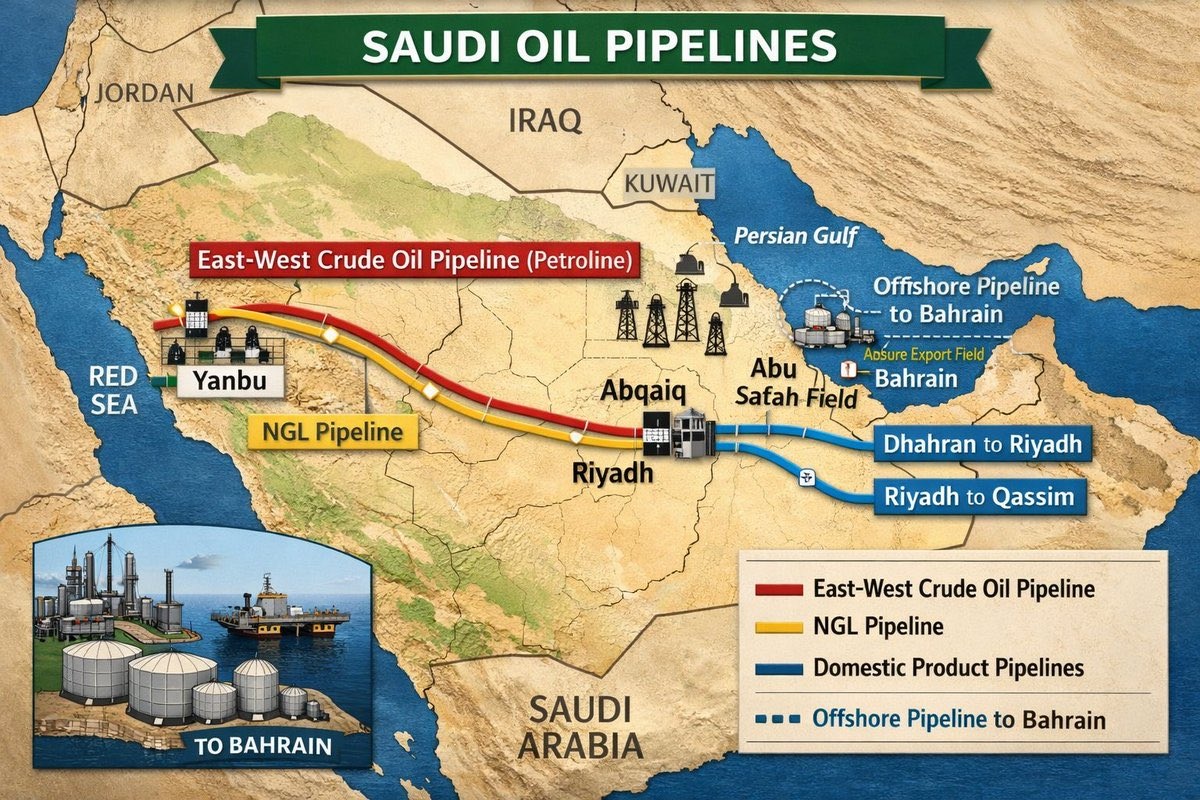
Oil is still moving. Workarounds exist. Saudi cargoes load inside the Gulf, transit with trackers off, and transfer ship-to-ship off Oman or Fujairah. The East-West pipeline feeds Yanbu on the Red Sea; some volumes then shuttle north to Egypt’s SUMED system and reload in the Mediterranean for the long haul around Africa. Tanker rates have exploded—Middle East-to-China VLCC rates have moved from $100,000–$200,000 a day into the $600,000 range—but the molecules keep finding a path. Iranian volumes to China have been cut roughly in half, yet China has substituted other grades and drawn inventories. Oil is fungible. It finds a way.
That is why crude prices have not stayed at wartime peaks. Recent prints have WTI in the low-to-mid $80s and Brent in the mid-to-high $80s. The market is pricing flowing crude plus persistent risk, not a complete cutoff.
The consumer does not buy that crude. The consumer buys gasoline and diesel. Diesel is the more important signal for the broader economy because it powers the transportation system that moves food, goods, and industrial inputs. When diesel is tight, freight costs rise, and those costs pass through to everything on a truck, train, or ship.
Crack spreads tell the story. The U.S. Gulf Coast ultra-low-sulfur diesel crack versus WTI recently printed above $100 a barrel—an all-time high—and has remained extreme, near $93–94 in late August. European and Singapore gasoil cracks have also been multiples of historical norms. These are not “oil is expensive” numbers. They are “the world cannot turn enough crude into middle distillates fast enough” numbers.
How the U.S. Market Is Actually Set Up
The United States produces a large volume of crude and is running its refining system near the physical limit. For the week ending August 21, 2026, EIA data showed refinery utilization at 97.4 percent and crude inputs around 17.4 million barrels per day. That is not spare capacity. That is the system working hard.
Commercial crude stocks rose a modest 95,000 barrels to 428.9 million barrels and sit about 1 percent above the five-year average for this time of year. Product inventories tell a different story. Gasoline stocks fell 2.5 million barrels to 206.8 million barrels, 6 percent below the five-year average. Distillate stocks (mostly diesel plus heating oil) fell 2.2 million barrels to 103.4 million barrels—about 14 percent below the five-year average. Distillate inventories have been drawing even as refiners run full-out.
The U.S. is a major product exporter. Those exports help the rest of the world but leave less buffer at home. Some U.S. refiners also depend on Canadian heavy crude; disruptions or logistics constraints there matter. There is no Strategic Petroleum Reserve for diesel or gasoline. When product stocks get this lean heading into fall maintenance and winter heating demand, the system has little slack.
Retail prices already reflect the tightness. As of August 26, AAA national average regular gasoline was $4.10 a gallon. Diesel was $5.62 a gallon—well above year-ago levels and rising in recent weeks. Diesel’s year-over-year increase is far larger than gasoline’s. That is the transportation fuel that shows up in grocery prices, construction costs, and freight rates.
Stable Crude Does Not Mean Stable Fuel Bills
Crude is flowing, so a sudden $150 oil spike is not the base case while workarounds hold. That does not make consumer prices stable. Product markets are already tight. Inventories of distillates are historically low for the season. Global refining capacity remains impaired by Russian strikes, Middle East disruptions, and Chinese run cuts that prioritize the domestic market over exports. Additional weather or geopolitical shocks have less buffer to absorb them.
Two paths can eventually ease the squeeze: more refining capacity (which takes years) or demand destruction (which is painful). In the near term, refiners will keep maximizing diesel yields when cracks stay this wide. Consumers will keep paying the product price, not the crude price on the futures screen.
Currie’s message was not that oil has stopped moving. It was that the choke points are broader than one strait, the refining bottleneck is real, and the inflation that follows physical scarcity is not something the Fed can easily interest-rate away. Watch diesel, gasoline, and the crack spreads. That is what households and trucking companies actually buy.
- CNBC video: “The Strait of Hormuz is just one of many choke points being squeezed right now, says Jeff Currie” — https://www.cnbc.com/video/2026/08/26/the-strait-of-hormuz-is-just-one-of-many-choke-points-being-squeezed-right-now-says-jeff-currie.html
- Steve Hanke clip of Currie on choke points —
https://x.com/steve_hanke
(August 26, 2026 post with video)
- Recap of Currie’s Squawk Box points — X post by
@Truthsnoopy
, August 26, 2026
Oil flowing / workarounds
- Energy News Beat: “Oil Will Find a Way” — https://energynewsbeat.com/crude-oil/oil-will-find-a-way/
- Reuters: Aramco offers more oil outside Hormuz — https://www.reuters.com/business/energy/aramco-offers-more-oil-outside-hormuz-with-some-cargoes-heading-china-2026-08-26/
- Reuters: Saudi Aramco sells at least 4 million barrels loading outside Hormuz to China — https://www.reuters.com/business/energy/saudi-aramco-sells-least-4-million-barrels-crude-loading-outside-hormuz-china-2026-08-20/
U.S. inventories, runs, and utilization (EIA)
- EIA Weekly Petroleum Status Report summary (week ending August 21, 2026) — https://ir.eia.gov/wpsr/wpsrsummary.pdf
- EIA stocks data — https://www.eia.gov/dnav/pet/pet_stoc_wstk_dcu_nus_w.htm
- EIA refinery inputs and utilization — https://www.eia.gov/dnav/pet/pet_pnp_wiup_dcu_nus_w.htm
- EIA Weekly Petroleum Status Report page — https://www.eia.gov/petroleum/supply/weekly/
- Coverage of August 26 EIA release: BOE Report — https://boereport.com/2026/08/26/us-crude-stocks-rise-gasoline-and-distillate-inventories-fall-eia-5/
- OilPrice.com EIA recap — https://oilprice.com/Energy/Crude-Oil/US-Crude-Stocks-Barely-Budge-as-Gasoline-Inventories-Fall.html
Crack spreads and product tightness
- Energy News Beat: “Asia, Europe and US Diesel Crack Spreads Are On Fire” — https://energynewsbeat.co/downstream/asia-europe-and-us-diesel-crack-spreads-are-on-fire-what-does-this-mean-for-consumers-and-investors/
- Bloomberg: Diesel margins top $100 a barrel — https://www.bloomberg.com/news/articles/2026-08-18/diesel-margins-top-100-a-barrel-to-reach-record-high-as-supply-crunch-grows
- RBN Energy 3-2-1 crack spread — https://rbnenergy.com/market-data/3-2-1-crack-spread
- Jeff Currie X thread on diesel crack and choke points (August 20, 2026) —
https://x.com/CommodMkt
Retail prices
- AAA Fuel Prices (August 26, 2026) — https://gasprices.aaa.com/
- EIA weekly retail gasoline and diesel prices — https://www.eia.gov/dnav/pet/pet_pri_gnd_a_epm0_pte_dpgal_w.htm
- YCharts U.S. retail diesel price — https://ycharts.com/indicators/us_retail_diesel_price
Additional Currie context
- 24/7 Wall St. on Currie’s refined-products argument — https://247wallst.com/investing/2026/08/21/get-long-and-buckle-up-jeff-currie-explains-how-to-play-the-the-most-asymmetric-trade-in-modern-financial-history/
- CNBC International: “Illusion of abundance is likely well behind us” (August 17, 2026) — https://www.youtube.com/watch?v=2nWBrOOyW9Q
Data current as of August 26, 2026. Markets move quickly; inventories and cracks should be checked against the latest EIA and price prints.
The post Jeff Currie Dropping the Truth on CNBC appeared first on Energy News Beat.