Energy News Beat
An Iranian supertanker loaded with crude oil has left the port of Chabahar and crossed the longstanding U.S. naval blockade line, marking the first such successful transit with its location tracker (AIS) active since the blockade was imposed in April 2026. The move comes amid a new U.S.-Iran memorandum of understanding (MoU) that provides immediate sanctions waivers for Iranian oil sales, even before the formal signing scheduled for Friday.
The development signals that Iran is already capitalizing on early diplomatic relief, positioning itself to resume more open oil exports while broader sanctions relief and access to frozen assets remain conditional on further concessions.
The Tanker Movement: First Open Crossing Since April Blockade
According to the Wall Street Journal, citing United Against Nuclear Iran (UANI), an Iranian supertanker departed Chabahar on or around June 16, crossed the U.S. blockade line in the Gulf of Oman, and was steaming eastward with its tracking system switched on.
This is notable because most previous attempts since the April blockade involved vessels going “dark” (disabling AIS) or facing U.S. interdiction that forced returns to port. Chabahar, located on the Gulf of Oman outside the Strait of Hormuz, has served as a key alternative loading point for Iran amid restrictions on traditional Persian Gulf terminals like Kharg Island.
Map context: The U.S. blockade line (approximate, shown in historical April 2026 imagery) runs across the Gulf of Oman near Chabahar, designed to restrict Iranian oil outflows.
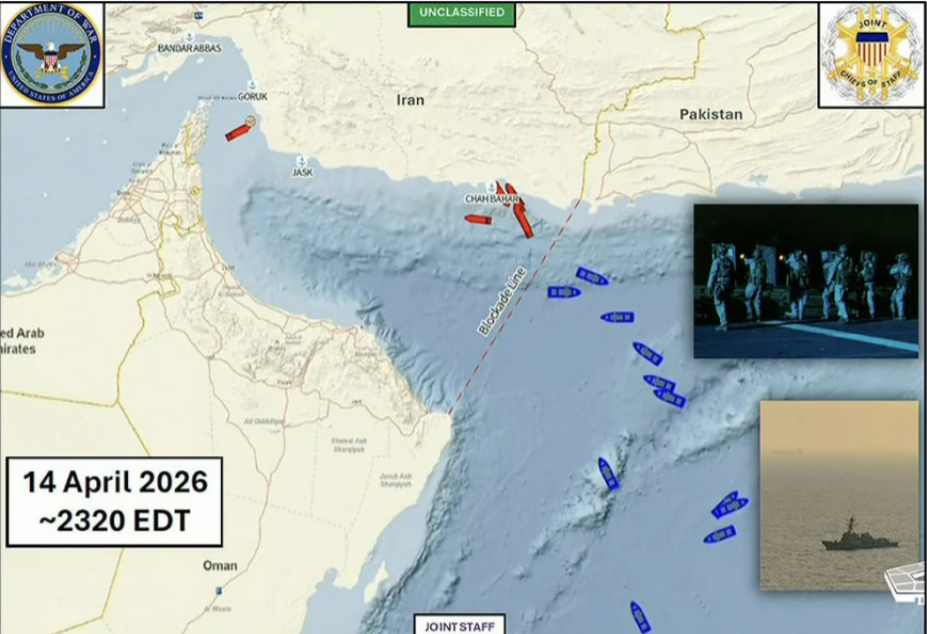
The specific vessel’s name has not been publicly disclosed in initial reports, but it fits the pattern of National Iranian Tanker Company (NITC) VLCCs (Very Large Crude Carriers) that have historically carried 1.5–2 million barrels each.
The Broader Deal Context: Immediate Oil Relief as a “Sweetener”
The tanker’s movement aligns with a Trump administration-Iran deal framework aimed at winding down the recent conflict. Key elements include:An MoU (electronically signed recently) that pauses fighting, lifts mutual blockades in the Strait of Hormuz, and opens 60 days of negotiations on Iran’s nuclear program.
Immediate sanctions waivers on Iranian oil and fuel sales, effective upon signing this week. These explicitly cover not just crude exports but also the supporting infrastructure: banking channels, shipping, and insurance.
Formal signing expected Friday (likely in Geneva or similar venue).
A senior U.S. official emphasized that while upfront relief is granted as an incentive to keep Iran at the negotiating table, sustained and deeper sanctions relief — including access to major frozen assets — is tied to verifiable Iranian performance on reopening the Strait of Hormuz (including mine clearance) and nuclear commitments.
Iran has reportedly sought $12 billion upfront plus $24 billion during the 60-day period, with discussions around access to portions of its estimated $100+ billion in previously frozen assets (primarily oil revenues held abroad, including in China and elsewhere).
How Will Iran Be Paid? Banking, Insurance, and Shipping Waivers
The waivers are designed to make transactions functional again:Banking: Allows Iranian entities or counterparties to use financial channels for payments without immediate sanctions risk.
Shipping & Insurance: Legitimizes the use of tankers and coverage for voyages carrying Iranian oil.
This shifts operations away from the pure “shadow fleet” model (dark ships, ship-to-ship transfers, spoofing) toward more normalized (though still sanctioned-origin) trade.
However, full monetization of large-scale exports and release of major frozen funds remain performance-based. The U.S. retains leverage to reimpose restrictions if milestones are not met. Critics argue this gives Iran early revenue without ironclad upfront verification on nuclear or Hormuz issues.
Market and Geopolitical Implications
Oil prices reacted sharply: Brent crude dropped around 5% in a single session as markets priced in potential supply recovery.
Prices have since traded below $80 in some sessions, reflecting reduced war premium despite lingering physical risks (mines in the Strait, trapped vessels, and the time required for full normalization).Positive implications:
Eases global energy supply concerns.
Provides Iran with economic breathing room, potentially stabilizing its regime during talks.
A diplomatic “carrot” approach may encourage compliance with Hormuz reopening and nuclear limits.
Risks and caveats:
Physical reopening of the Strait of Hormuz could take weeks (mine clearance, insurance normalization, crew/ship readiness).
Skepticism remains high among some U.S. lawmakers, Israel, and analysts about Iran’s willingness to deliver on nuclear curbs or fully secure the waterway.
The shadow fleet and China’s role as primary buyer are likely to continue evolving rather than disappear overnight.
Any perceived weakness in enforcement could embolden further Iranian testing of limits.
Where Is the Tanker Heading?
The vessel was last reported steaming through the Gulf of Oman eastward. No public destination has been confirmed, but historical patterns for Iranian crude point strongly to Asia — particularly China, Iran’s largest customer. Routes often involve the Indian Ocean, with possible ship-to-ship transfers or direct delivery to Chinese ports or offshore facilities. The active tracker suggests a more transparent voyage than the covert operations common during the height of the blockade.
Verification and Sources
The core claims are primarily sourced from:
Wall Street Journal (June 16, 2026) — detailed reporting on the deal terms and UANI-cited tanker movement.
United Against Nuclear Iran (UANI) — a maritime tracking and satellite analysis group that flagged the supertanker transit.
Supporting context from Reuters (draft deal elements), Iranian state media reports on resumed shipping, and market data from various financial outlets.
No independent satellite imagery or AIS data for this specific June 16 tanker has been widely published yet beyond the UANI/WSJ reporting. Earlier similar movements (e.g., tanker HUGE) were corroborated by TankerTrackers.com and Bloomberg using AIS/satellite data.
- WSJ: “The Trump-Iran Deal Allows Tehran to Immediately Sell Oil” (June 16, 2026) — https://www.wsj.com/world/middle-east/the-trump-iran-deal-allows-tehran-to-immediately-sell-oil-37a1ebe5
- Mario Nawfal X post summarizing the WSJ reporting (June 16, 2026) — https://x.com/MarioNawfal/status/2066926275231461411
- Reuters: “Iran says draft US deal includes oil sanctions waiver, nuclear limits and asset release” (June 14, 2026) — https://www.reuters.com/business/energy/iran-says-draft-us-deal-includes-oil-sanctions-waiver-nuclear-limits-asset-2026-06-14/
- UANI Iran War Shipping Updates (various dates, including June 10, 2026) — https://www.unitedagainstnucleariran.com/blog/iran-war-shipping-update-june-10-2026 (and earlier April/May trackers)
- Additional context: Bloomberg and other maritime reports on prior blockade evasions (April–May 2026).
This situation remains fluid. Energy News Beat will continue monitoring tanker movements, formal deal signing on Friday, and any further details on the specific vessel or payment mechanisms as they emerge.
The post Iranian Supertanker Slips Out of Chabahar, Crossing US Blockade as Tehran Moves Oil Ahead of Friday Deal Approvals appeared first on Energy News Beat.