Energy News Beat
Natan Shahar, Founder & Chief Strategy Officer of Standard Carbon, stops by with solutions.
What if the solution to the alleged climate change was hiding in plain sight—literally in the smokestacks of power plants, factories, and boilers around the world? On this episode of the Energy Newsbeat Podcast, host Stu Turley sits down with Natan Shahar, founder of Standard Carbon, to explore a breakthrough technology that’s turning CO2 emissions into pipeline-grade natural gas. Drawing inspiration from Mars mission architecture and driven by New York City’s aggressive climate regulations,
Standard Carbon has cracked the code on making clean energy economically viable—not through subsidies or carbon credits, but through clever energy arbitrage. With commercial systems already operating in Manhattan and Israel, and a growing pipeline of contracts from Europe to Pakistan, Shahar reveals why this technology could be the missing piece in the global energy puzzle, solving not just climate concerns, but the energy security crisis facing nations worldwide.
For Blue States and Countries following Net Zero policies, this podcast is critical. Consumers and constituents want low-cost energy with the least impact on the environment. Couple that with wind and solar needing dispatchable power to fill in when the wind does not blow, or the sun does not shine. Producing natural gas out of CO2 that is burning from coal, or other industrial processes, is a real win for everyone. For countries that still have coal plants, this would be a much more cost-effective way to bring them into the Net Zero world rather than just shutting them down.
1. Standard Carbon’s Core Technology
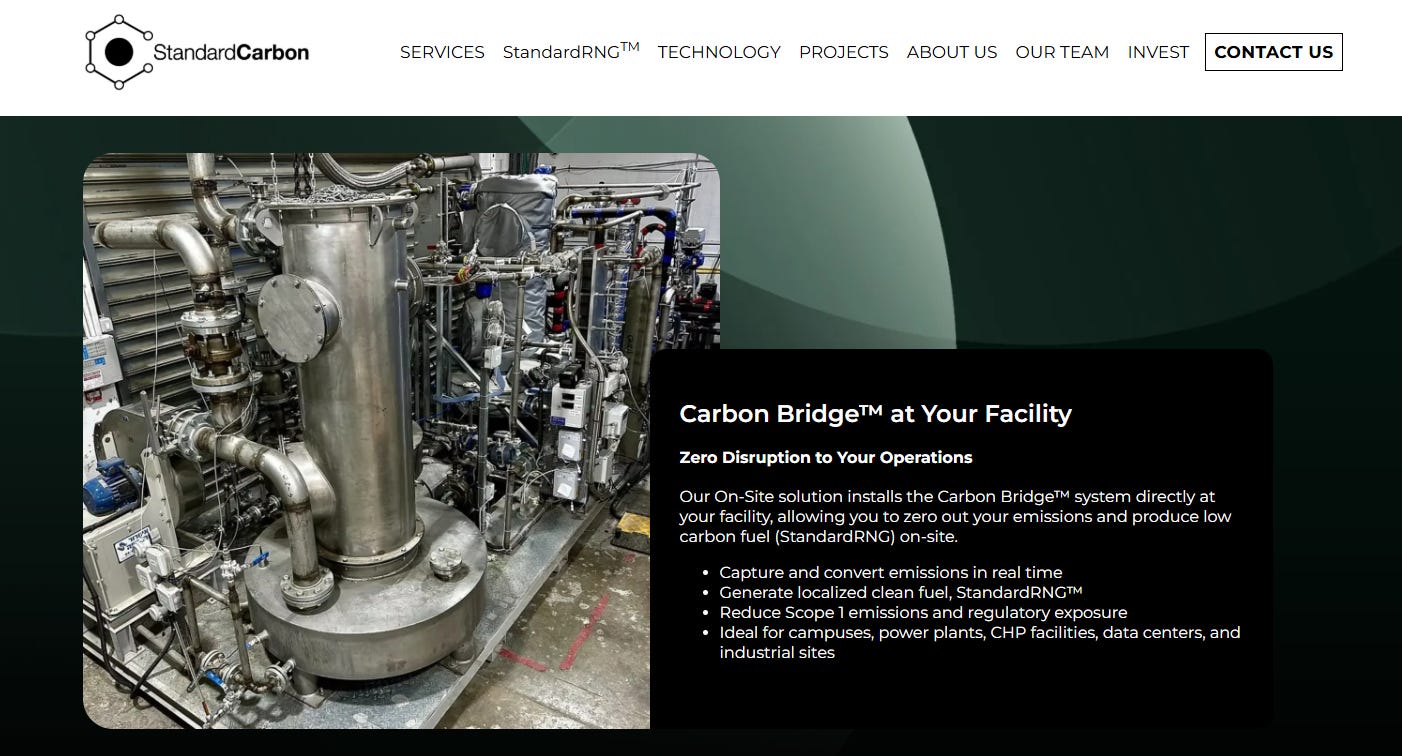
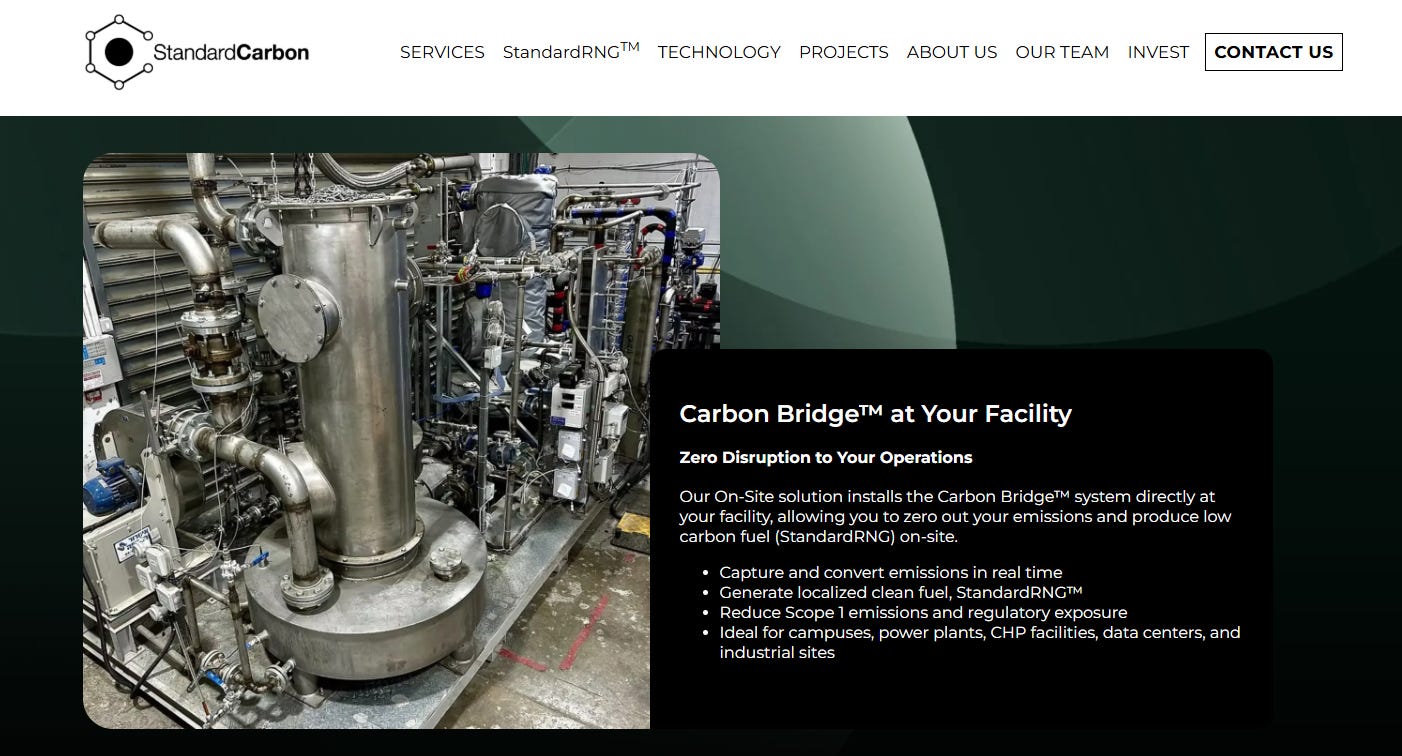
The company produces pipeline-grade natural gas (methane) from CO2 emissions captured from combustion sources like power plants, boilers, cement factories, and refineries. They capture CO2 from smokestacks and convert it into usable natural gas through a process combining three established technologies: amine-based carbon capture, low-pressure alkaline electrolysis, and 19th-century Sabatier methanation chemistry.
2. Operational Readiness & Deployment
Standard Carbon has deployed two commercial-scale systems—one in Israel (2023) and one in New York City (2025). The NYC system is publicly accessible in Manhattan and operated by the Grove School of Engineering at City College, providing transparent, third-party verification of the technology’s effectiveness.
3. Market Economics & Competitive Advantages
The business model focuses on three key factors:
- Cost of intermittent power: Using cheap, off-peak electricity (often negatively priced wind/solar power at night)
- Fossil fuel pricing: Competing against natural gas and LNG prices in different markets
- Regulatory incentives: Carbon pricing and decarbonization mandates
The company can produce gas competitively in markets like Europe and New York City, where LNG and fossil fuel prices are high.
4. Geographic Market Opportunities
Prime markets include:
- New York City: Most aggressive climate regulations globally (3x higher carbon price than EU)
- Europe & UK: Strong decarbonization regulations and high LNG prices
- Japan, South Korea, Taiwan: Coal plants being reactivated; high energy security concerns
- Pakistan: Energy security crisis driving interest in energy independence
- Saudi Arabia & GCC countries: High oil-based electricity generation
5. Energy Security & Geopolitical Context
The Strait of Hormuz chokepoint is critical for global energy supply. Recent developments include:
- UAE and Saudi Arabia pipeline expansions
- Iraq’s new Mediterranean pipeline projects
- Pakistan’s LNG crisis and power shortages
- Qatar cutting LNG/LPG exports
- European dependence on energy imports
6. Regulatory & Policy Landscape
- Biden Administration: Inflation Reduction Act rejected “imaginary” renewable credits; requires real-time renewable use
- Trump Administration: Favors “firm” energy (batteries, geothermal, green molecules) over intermittent sources
- Both administrations converged on prioritizing reliable, available energy
- New Secretary of Energy Chris Wright emphasizes levelized cost of energy vs. electricity
7. Carbon Credits vs. Real Molecules
Standard Carbon is moving away from carbon credit trading toward delivering certified clean fuel with chain-of-custody verification. Customers want actual low-carbon gas delivered through pipelines, not accounting credits—a more valuable business model than credit trading.
8. Technology Origins & Inspiration
Natan’s inspiration came from reading “The Case for Mars” by Dr. Robert Zubrin, which described producing rocket fuel from Mars’s CO2 atmosphere. He adapted this concept for Earth-based applications after New York City passed aggressive climate legislation in 2019.
9. Grid Resiliency & Data Center Power
A critical emerging use case: AI data centers require localized power generation near urban centers due to latency requirements. Gas-fired generation is the only practical option, making decarbonized gas essential for powering future AI infrastructure in cities.
10. Intellectual Property & Competitive Moat
Standard Carbon has filed extensive patents in the US and Europe to protect their integrated technology, though the core components are well-established. The competitive advantage lies in the integration and optimization rather than individual technologies.
This is a compelling story about how existing technologies can be combined to address both energy security and decarbonization challenges in a commercially viable way.
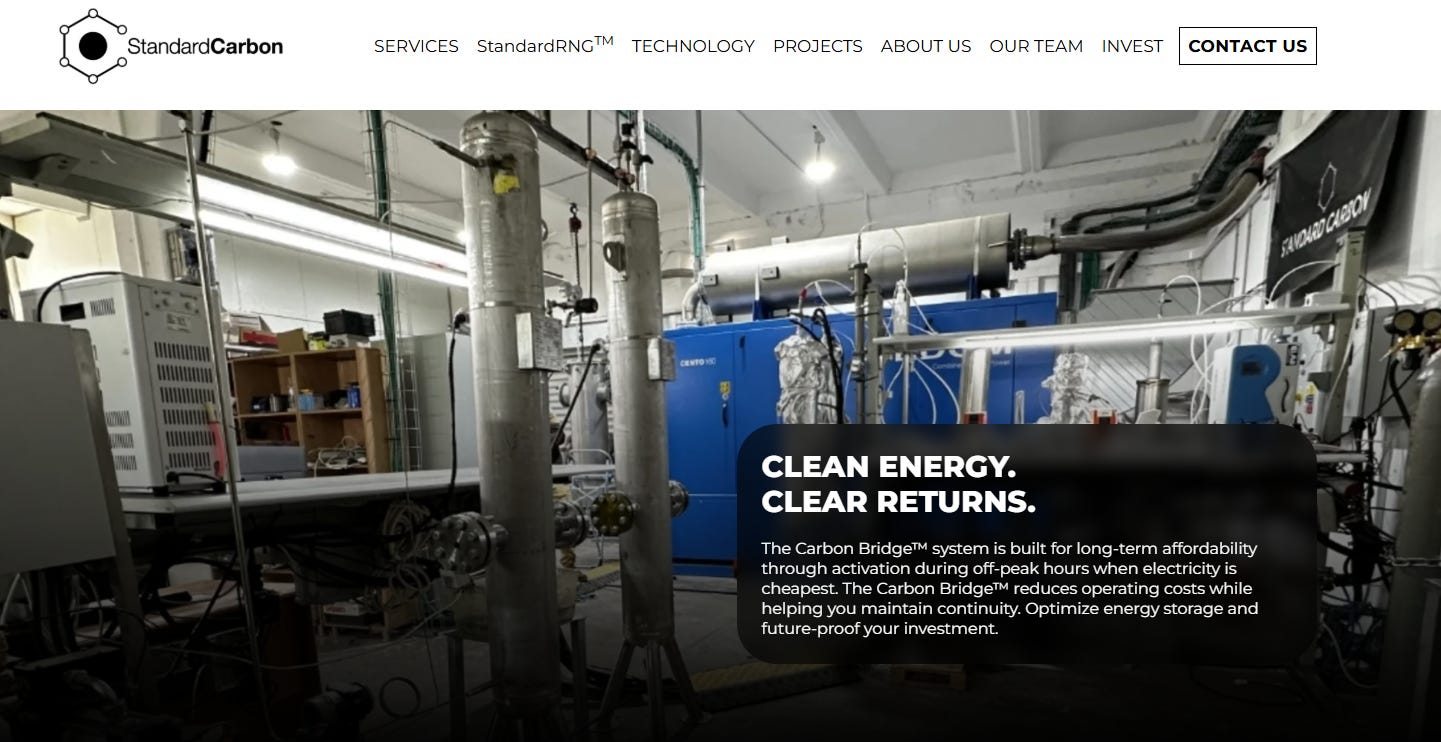
I am quite impressed with StandardCarbon’s ability to pull natural gas from emissions from coal- and natural gas-fired generators to add to the system and pull particulate matter out. This is huge, and rather than just capturing CO2 and storing it, it uses it for energy. Storing the emissions until power is lower cost and transforming to natural gas at non-peak operating times is critical, and part of the business model.
The target market is any country or state following the Net Zero path, or countries wanting to get more energy from their coal plants. This is a wide open opportunity for them.
Follow Natan on his LinkedIn here: https://www.linkedin.com/in/natan-shahar-3ba84920/
Check out Standard Carbon here: https://www.standardcarbon.com/
Thanks again to all of our great subscribers, patrons, and sponsors.


A shout-out to Steve Reese and the Reese Energy Consulting group for sponsoring the Podcast https://reeseenergyconsulting.com/.

Data2 if you have any business systems, can you trust A? Well, they have the patent on validation. . https://data2.zoholandingpage.com/energy
And we have WellDatabase rolling in as a new sponsor.
The post From Smokestacks to Solutions: How Standard Carbon is Decarbonizing Energy appeared first on Energy News Beat.