Energy News Beat
Iran’s ballistic missile threats have expanded beyond the Middle East into Europe, with Ukraine becoming the latest target after the United Kingdom. This escalation ties directly to Tehran’s strategic partnership with Moscow and the defense of critical Caspian Sea trade and military logistics routes that sustain both nations amid ongoing conflicts and sanctions.
On July 25-26, 2026, Ukrainian forces conducted long-range strikes on vessels in the Caspian Sea. Ukraine’s Security Service and President Volodymyr Zelenskyy reported hits on ships involved in military cargo shipments between Iran and Russia, including drone and missile components, as well as a Russian warship and related targets. Iranian officials described one of the vessels as a commercial ship flying their flag, claiming the attack killed one sailor and injured another. Tehran summoned Ukraine’s chargé d’affaires, condemned the incident as aggression, and vowed retaliation while asserting its right to defend national interests.
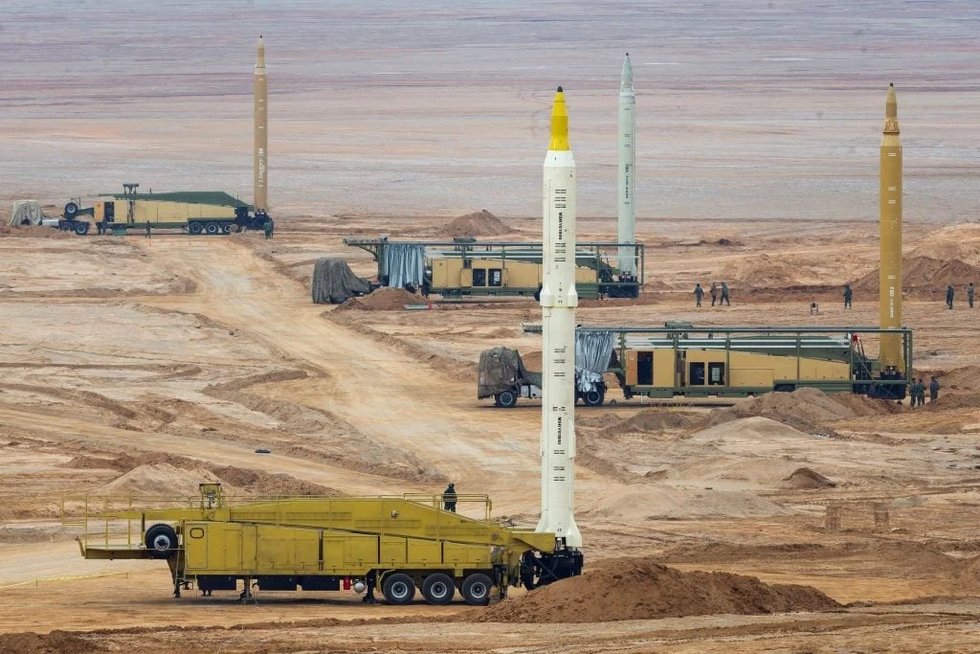
Iranian state-affiliated media and officials quickly highlighted that portions of Ukrainian territory fall within range of Iran’s ballistic missiles. The solid-fueled Sejjil-2 medium-range ballistic missile (MRBM) has an estimated range of up to 2,000 km. Distances from western Iran to eastern Ukraine measure roughly 1,700–2,000 km, placing key areas theoretically within reach. Pro-Iranian outlets circulated maps referencing systems such as the Khorramshahr-4.
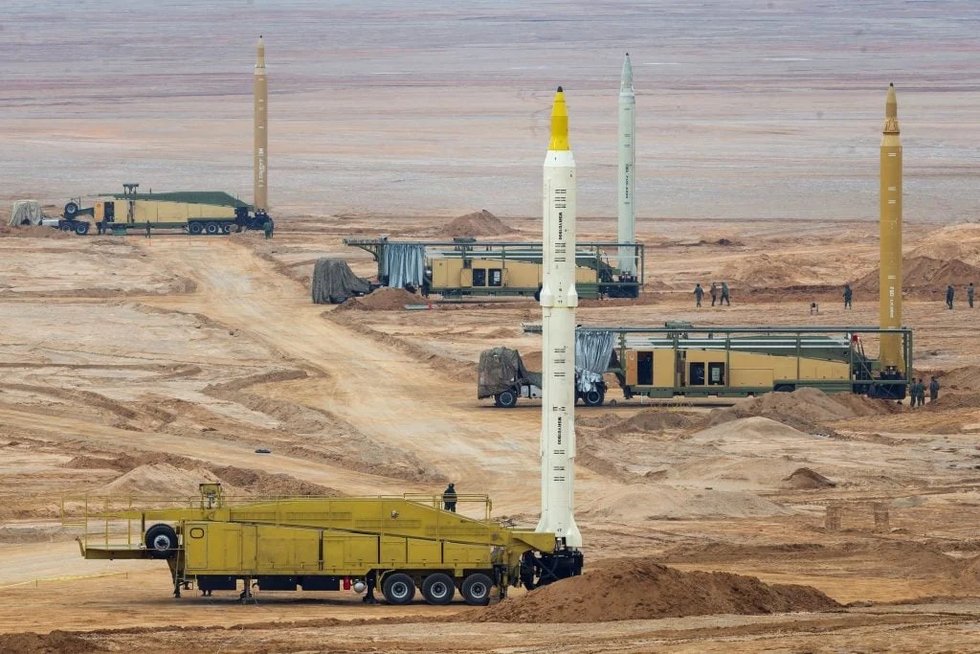
This follows earlier signals directed at the United Kingdom. In March 2026, during heightened Iran-Israel-U.S. tensions (including operations around that period), Iran launched ballistic missiles toward the joint U.S.-UK base at Diego Garcia in the Indian Ocean—approximately as distant from Iran as London or Paris. Analysts assessed the attempt demonstrated ranges approaching or exceeding 4,000 km with systems linked to the Khorramshahr-4 (also called Kheibar), shifting the Iranian missile threat from theoretical to demonstrative for European capitals. One missile failed and another was intercepted, but the action prompted warnings that cities including Berlin, Paris, and Rome could fall within potential reach depending on payload and trajectory.
Iran’s Longer-Range Missile Programs
Iran maintains the Middle East’s largest ballistic missile inventory, with pre-2025 estimates exceeding 3,000 missiles (later depleted and partially reconstituted after intensive use). Official Iranian policy has long cited a self-imposed 2,000 km range limit, but technical assessments and demonstrated performance indicate greater potential.
Key systems include:
- Sejjil (Sejil) family: Solid-fueled MRBMs with ranges around 2,000 km, noted for mobility, quicker launch times, and hypersonic-class attributes in some variants. These are among the more operationally relevant systems for regional and near-European reach.
- Khorramshahr series (including Khorramshahr-4/Kheibar): Liquid-fueled missiles derived from North Korean designs (related to the Musudan/BM-25). Official range is listed near 2,000 km with heavy warheads (1,500–1,800 kg), but lighter payloads or optimized trajectories have been assessed at 2,500–4,000 km. The Diego Garcia attempt highlighted this extended capability. Variants may incorporate improved guidance (INS with possible satellite updates) and terminal maneuvers.
- Fattah-1 and Fattah-2: Claimed hypersonic missiles with high speeds (Mach 10+ to 13–15 estimates), maneuvering reentry vehicles intended to complicate interception, and ranges overlapping the MRBM category.
- Supporting systems: Earlier Shahab-3/Ghadr/Emad families (1,000–2,000+ km) and space-launch vehicle technology that could dual-use for longer-range development. U.S. assessments have projected potential militarily viable ICBM capability by around 2035 if pursued, though Iran has not declared such a program.
Accuracy remains a noted limitation for many systems (circular error probable potentially in the hundreds of meters to over a kilometer for older designs), and large-scale effective strikes on distant, defended targets would face significant challenges from European and allied missile defenses. Nonetheless, even limited or demonstrative use raises the political and defensive costs for Europe.
Implications:
Defending the Russia-Iran Axis and Trade
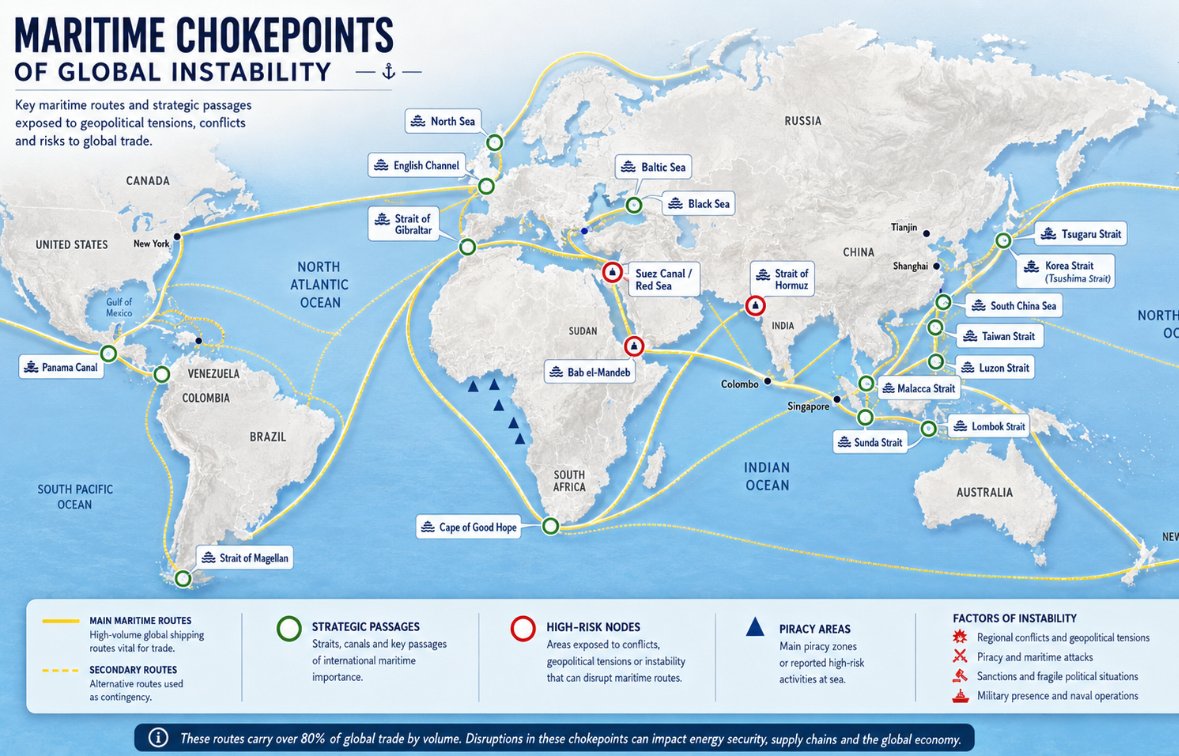
The Caspian Sea has become a vital, relatively sheltered corridor for Russia-Iran cooperation. It facilitates the transfer of military cargo (drones, components, munitions), energy-related goods, and sanctions-evasion trade. Russia has used the route to ship materials supporting Iran’s capabilities, while Iran has supplied Russia with drones, short-range ballistic missiles, and other systems for the war in Ukraine. Broader economic ties include oil and gas cooperation, with Caspian resources and northern Iranian ports gaining importance amid pressure on southern routes and the Persian Gulf.
Ukraine’s strikes directly targeted this logistics lifeline. Iran’s missile warnings serve to deter further interference, protect the partnership that provides Moscow with munitions and Tehran with technical, diplomatic, and potential nuclear-related support, and signal resolve against European-backed actions. For energy markets, escalations involving Caspian routes or Iranian retaliation risks add volatility to oil and gas flows already influenced by Middle East tensions, sanctions, and shadow fleets. Broader European energy security faces secondary effects through heightened defense spending pressures and potential disruptions to regional stability.
Analysts note that the shift of Iranian missile rhetoric and demonstrated reach toward Europe increases urgency for improved ballistic missile defenses across the continent—a process already accelerated by Russian strikes on Ukraine. While successful precision strikes deep into Europe remain improbable in the near term due to accuracy, numbers, and defensive systems, the political signaling and the defense of the Russia-Iran trade and military axis mark a clear expansion of the threat envelope.
- War Radar (@War_Radar2) X post, July 26, 2026: https://x.com/War_Radar2/status/2081227105975889965
- The Guardian Ukraine war briefing on Caspian vessel attack: https://www.theguardian.com/world/2026/jul/26/ukraine-war-briefing-iran-accuses-kyiv-vessel-caspian-sea
- Kyiv Independent on Ukraine strikes on military cargo vessels: https://kyivindependent.com/ukraine-strikes-iranian-vessel-used-for-military-cargo-transport-in-caspian-sea/
- Defense Watch on Iran’s 2026 missile arsenal: https://thedefensewatch.com/military-ordnance/irans-missile-arsenal-2026-range-stockpile-threat/
- Wall Street Journal on Iran missile threat to Europe becoming real (Diego Garcia context): https://www.wsj.com/livecoverage/iran-us-israel-war-updates-2026/card/iran-s-missile-threat-to-europe-becomes-real-arms-expert-says-zHtci4dkzV48oFG9f1aX
- Politico on Europe bracing for Iranian threats: https://www.politico.eu/article/iran-war-europe-braces-tehran-attack-retaliate-threat-missiles/
- CSIS Missile Threat on Khorramshahr: https://missilethreat.csis.org/missile/khorramshahr/
- New York Times on Caspian Sea as strategic trade route for Iran-Russia: https://www.nytimes.com/2026/05/09/world/middleeast/caspian-sea-iran-russia.html
- Additional reporting from Reuters, Kyiv Post, Defence Express, and OilPrice.com analyses of Caspian energy and military logistics.
This development underscores how intertwined the Russia-Ukraine war, Iran’s regional posture, and energy/trade corridors have become. Continued monitoring of Caspian activity and Iranian missile deployments will be essential for assessing risks to European security and global energy markets.
The post Iran Threat Moves into Europe, Defending Russian Trade appeared first on Energy News Beat.