
Energy News Beat
In some industries, profits surged. In others, profits sagged. By major industry.
By Wolf Richter for WOLF STREET.
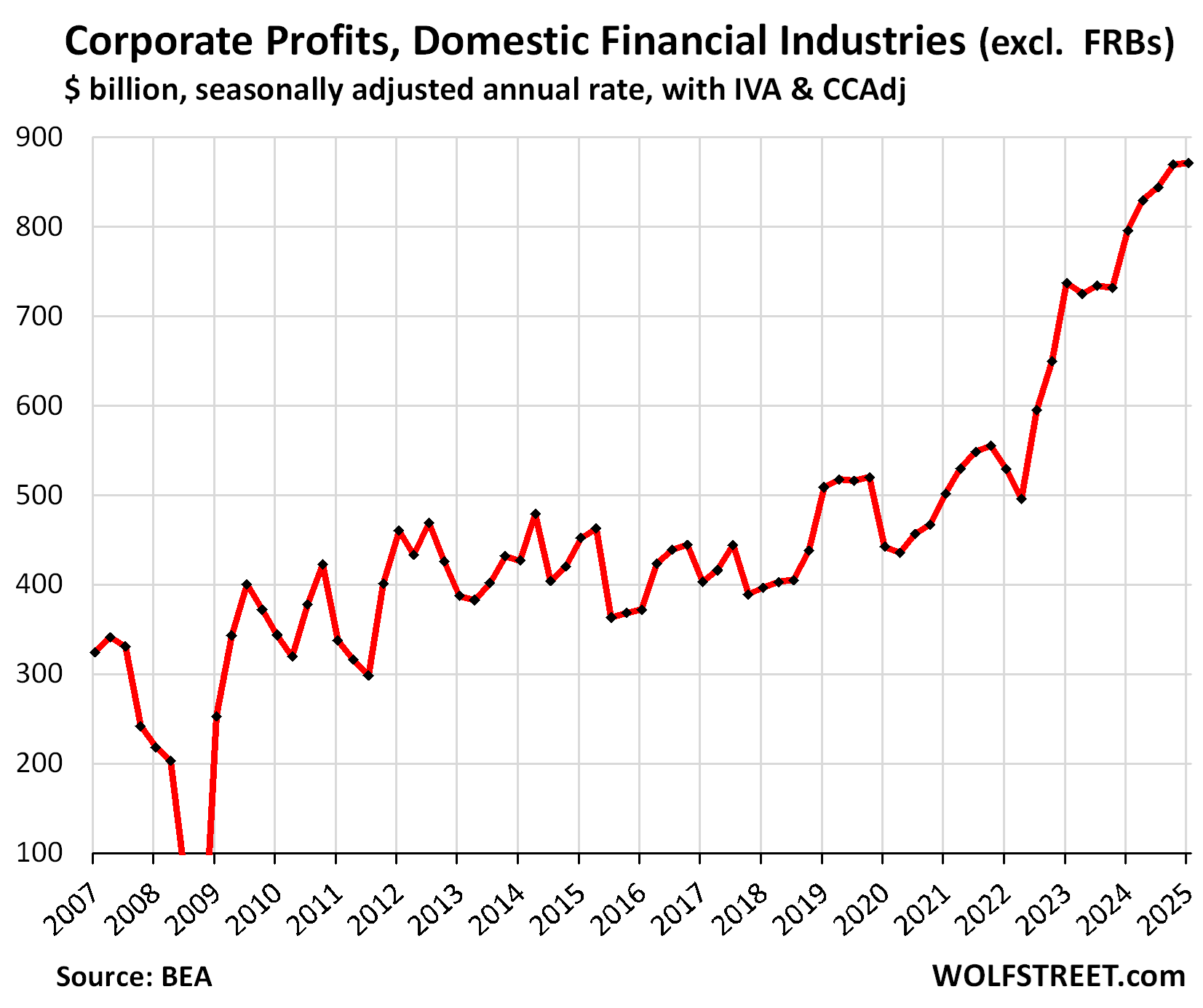
The explosion of corporate profits during the high-inflation years stalled in Q1, according to data from the Bureau of Economic Analysis today. That explosion of profits was quite something. From Q1 2020 through Q4 2024, over those five years, pretax profits of incorporated businesses of all sizes in nonfinancial industries had spiked by 122%, and in financial industries by 97%. Over the same period, CPI inflation rose by 23%. But in Q1, corporate profits remained essentially flat.
In nonfinancial domestic industries, pretax profits of incorporated businesses of all sizes edged up by just 0.1% in Q1, to a seasonally adjusted annual rate of $2.95 trillion. Year-over-year, profits were still up by 7.9%, due to the surge last year.
This category includes all businesses except financial firms. More on the individual categories of nonfinancial firms in a moment.
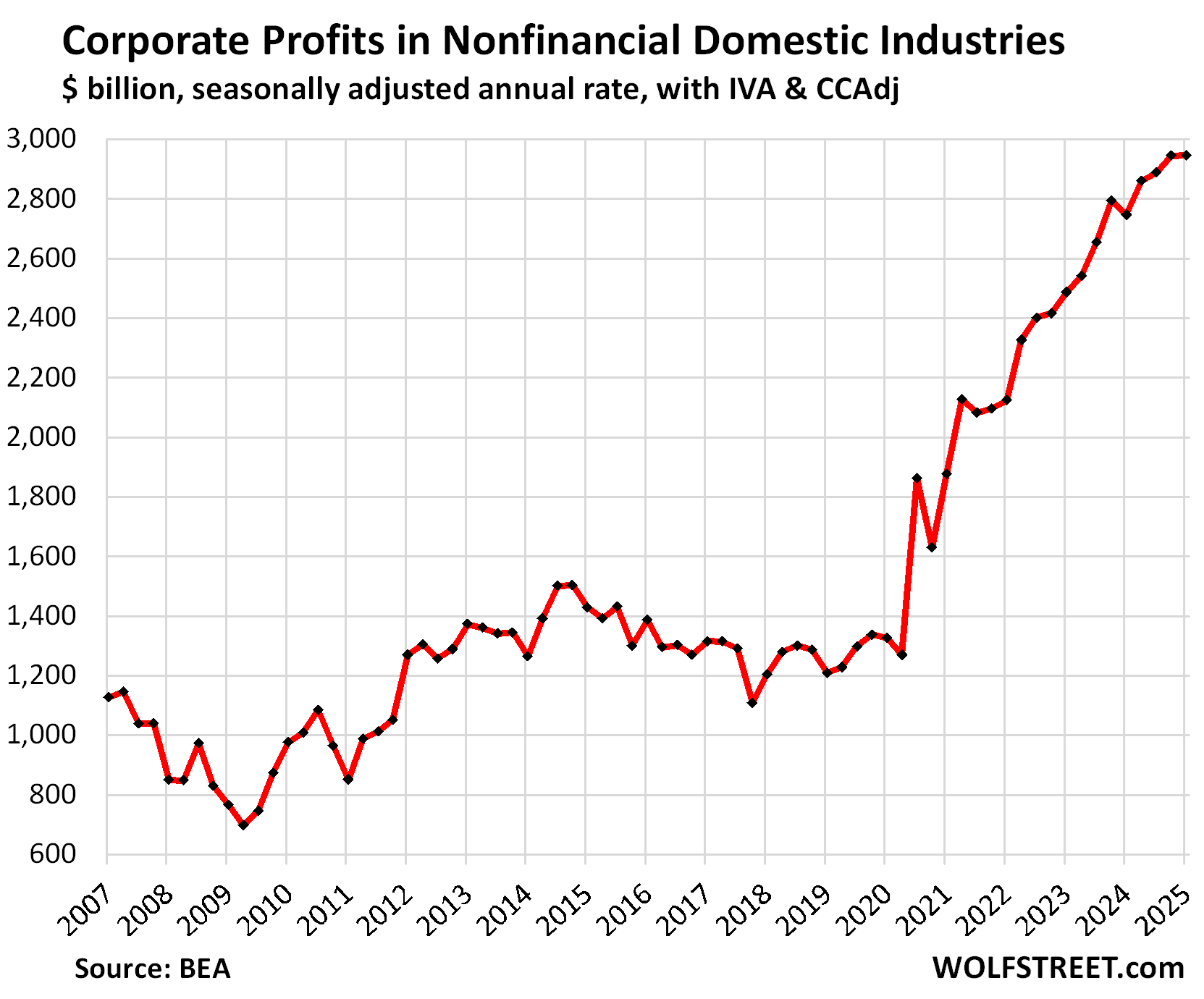
In financial domestic industries, pretax profits edged up by just 0.2%, to a seasonally adjusted annual rate of $872 billion.
The category includes banks and bank holding companies, firms engaged in other credit intermediation and related activities; firms engaged in securities, commodity contracts, and other financial investments and related activities; insurance carriers; funds, trusts, etc. But it does not include the 12 regional Federal Reserve Banks (FRBs).
These are pre-tax profits “from current production” by all businesses that have to file corporate tax returns, including LLCs and S corporations, plus some organizations that do not file corporate tax returns. The BEA obtains this information from IRS income tax data and from financial statements filed with the SEC.
The profit explosion fueled the high-inflation period. High inflation by definition means companies can and do raise their prices by a lot without losing sales. This kind of sudden “pricing power,” when it occurs, spreads like wildfire because it immediately inflates profits.
During the high-inflation years, companies could raise prices willy-nilly because consumers were willing to pay whatever, loaded up as they were with free money from stimulus funds, PPP loans, mortgage and student-loan forbearance, eviction bans, all kinds of tax credits, etc.
Faced with higher prices, workers in turn clamored for higher wages, and they started massively changing jobs to get those higher wages. Companies, having discovered their pricing power, were then willing to pay higher wages to keep and attract talent.
The phenomenon that consumers were suddenly willing to pay whatever, starting in late 2020, caused companies to jack up their selling prices while they were also willing to pay somewhat higher prices to their suppliers and somewhat higher wages to their employees. And on the difference, pretax profits blew out.
But recently, at least some price resistance has set in, to where raising prices entails the risk of losing sales.
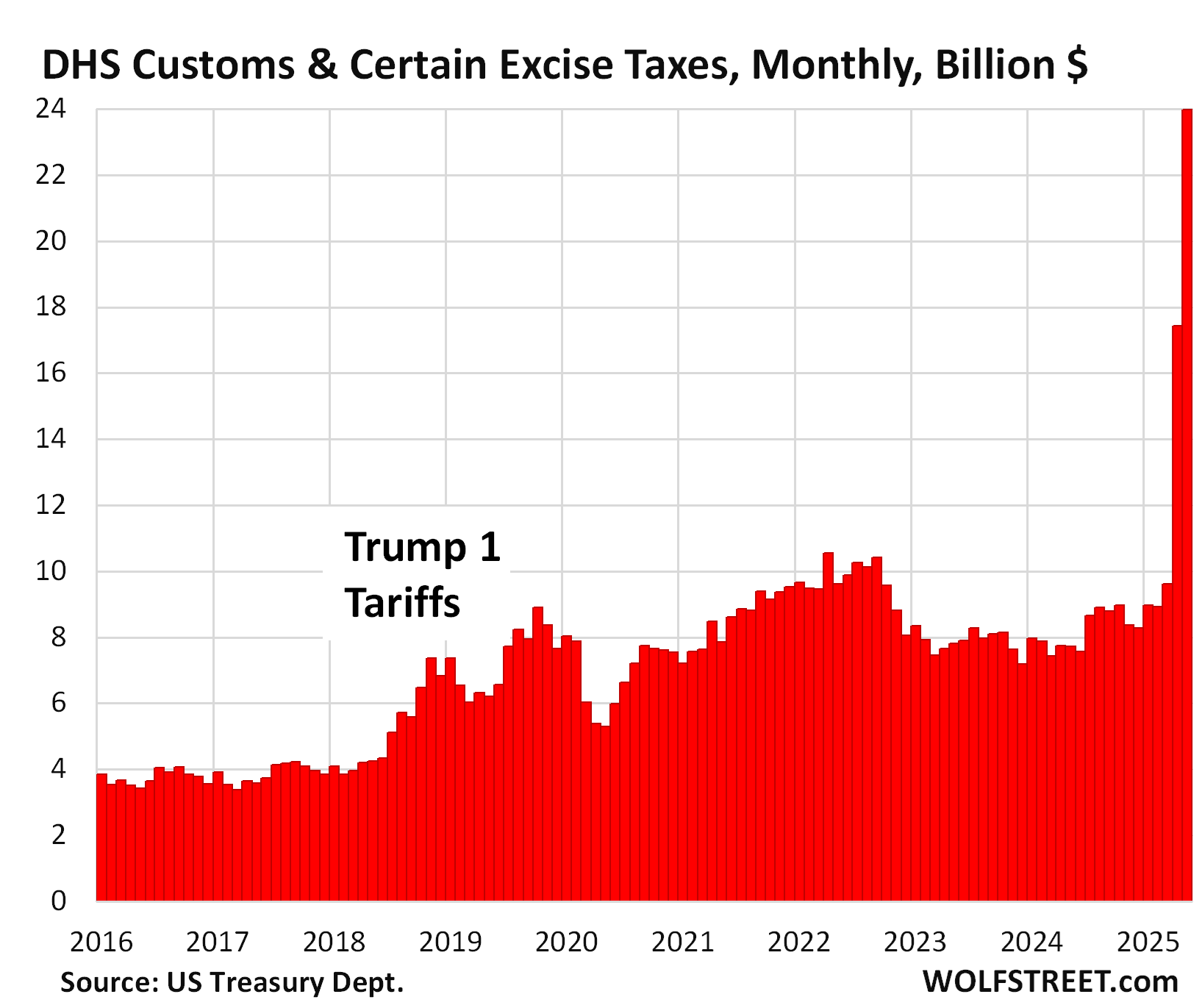
Q1 was still before the new tariffs were paid. The tariff payments by importers to the government started to surge in April and spiked further in May, which will hit Q2 profits of the companies that import tariffed goods. We discussed the monthly cash flow from tariffs here.
Companies have not yet been able to pass the tariffs on to consumers, as of the May inflation data. In Q2 so far through May, tariffs were paid out of corporate profits, not by consumers. We don’t know yet about June’s inflation data. But companies overall have lots of room to eat the tariffs, given the gigantic profits they obtained by jacking up prices since 2020.
Corporate profits by major industry.
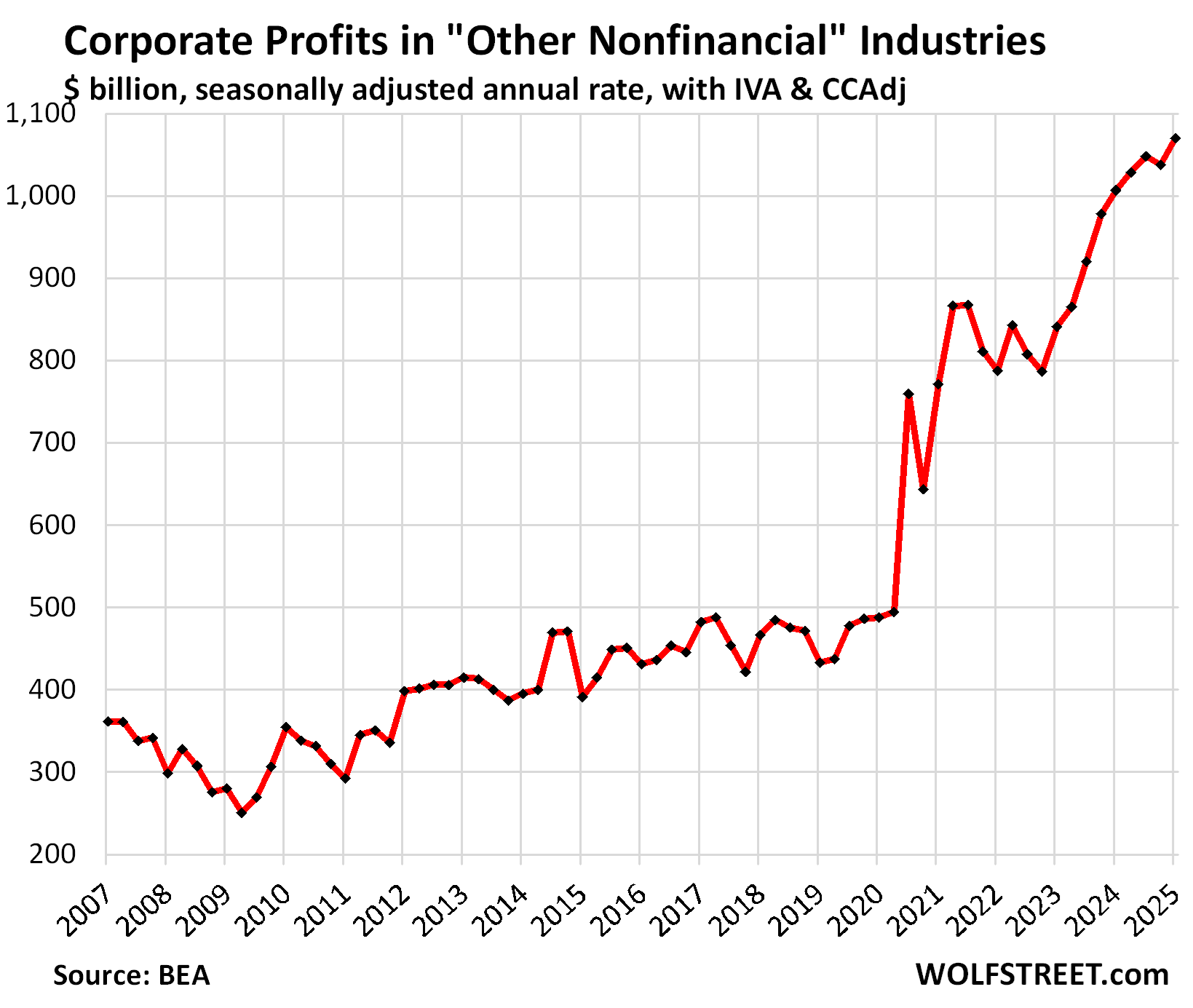
“Other nonfinancial” industries: This is the biggest category by profits, with huge industries: construction; professional, scientific, and technical services (includes some tech and social media companies); healthcare and social assistance; real estate and rental and leasing; accommodation and food services; mining and oil-and-gas drilling; administrative and waste management services; educational services; arts, entertainment, and recreation; agriculture, forestry, fishing, and hunting.
Profits jumped by 3.1% quarter over quarter and by 7.3% year-over-year, to a seasonally adjusted annual rate of $1.07 trillion.
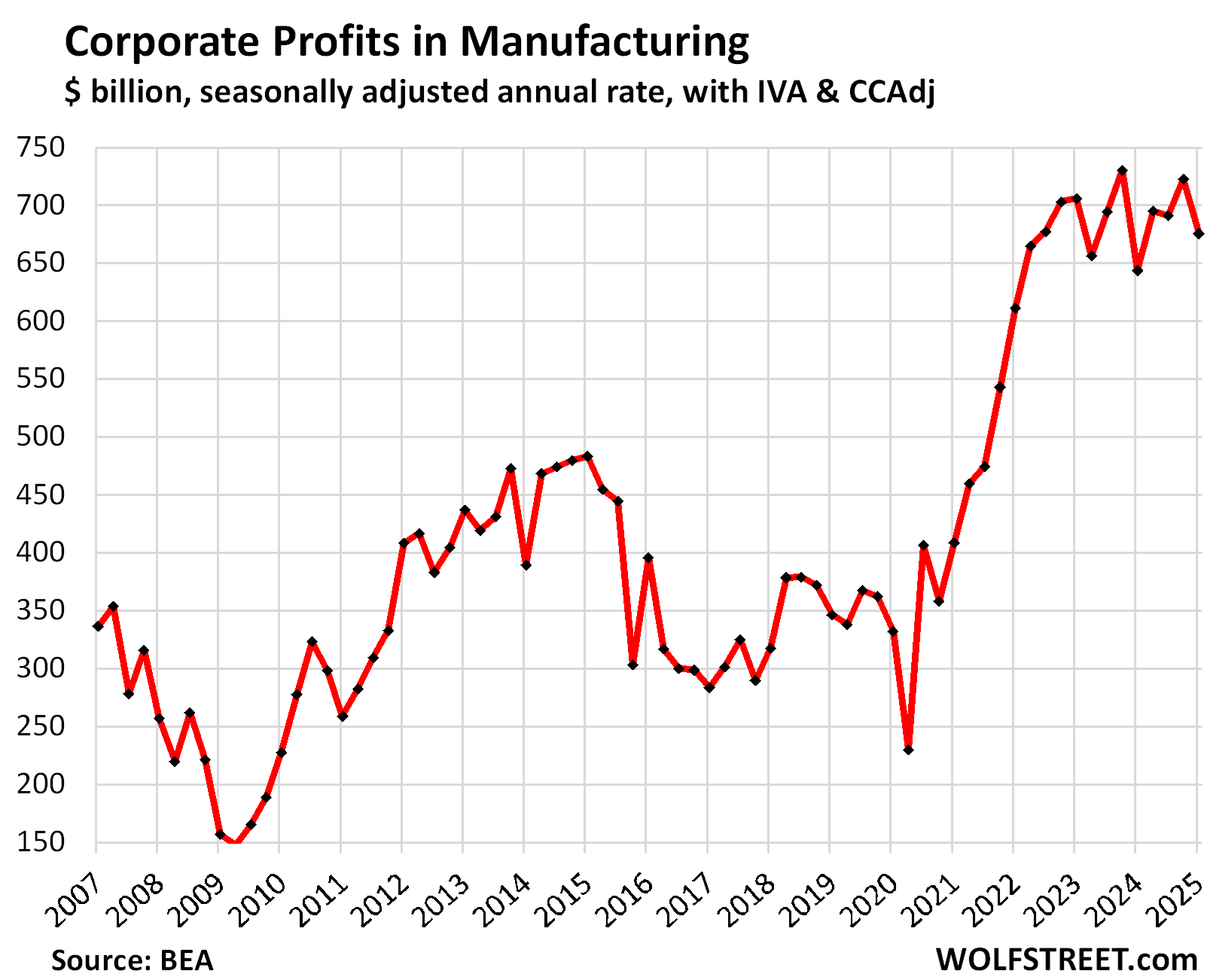
Manufacturing industries: Profits fell by 6.5% in Q1 from Q4, to a seasonally adjusted annual rate of $675 billion, but year-over-year, were still up by 4.8%.
This includes manufacturing of durable goods (computers, electronics, electrical equipment, appliances, motor vehicles, trailers, machinery, fabricated metals, components, etc.) and nondurable goods (food, beverages, supplies, petroleum products, chemical products, coal products; etc.).
Since 2019, profits in the manufacturing industries have doubled.
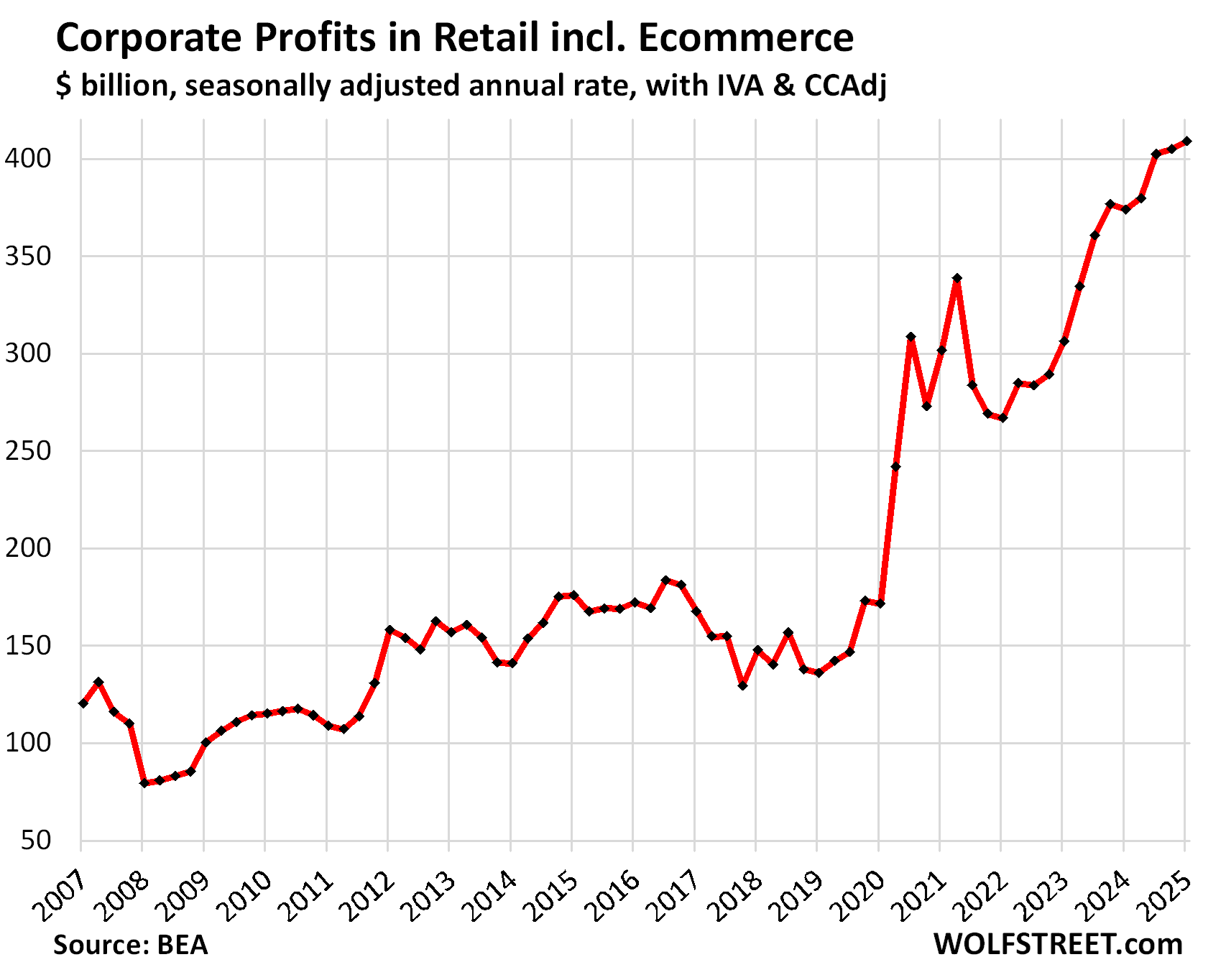
Retail trade, including Ecommerce: Profits rose by 1.0% in Q1 from Q4 and by 10.5% year-over-year, to a seasonally adjusted annual rate of $409 billion, up 138% since Q1 2020:
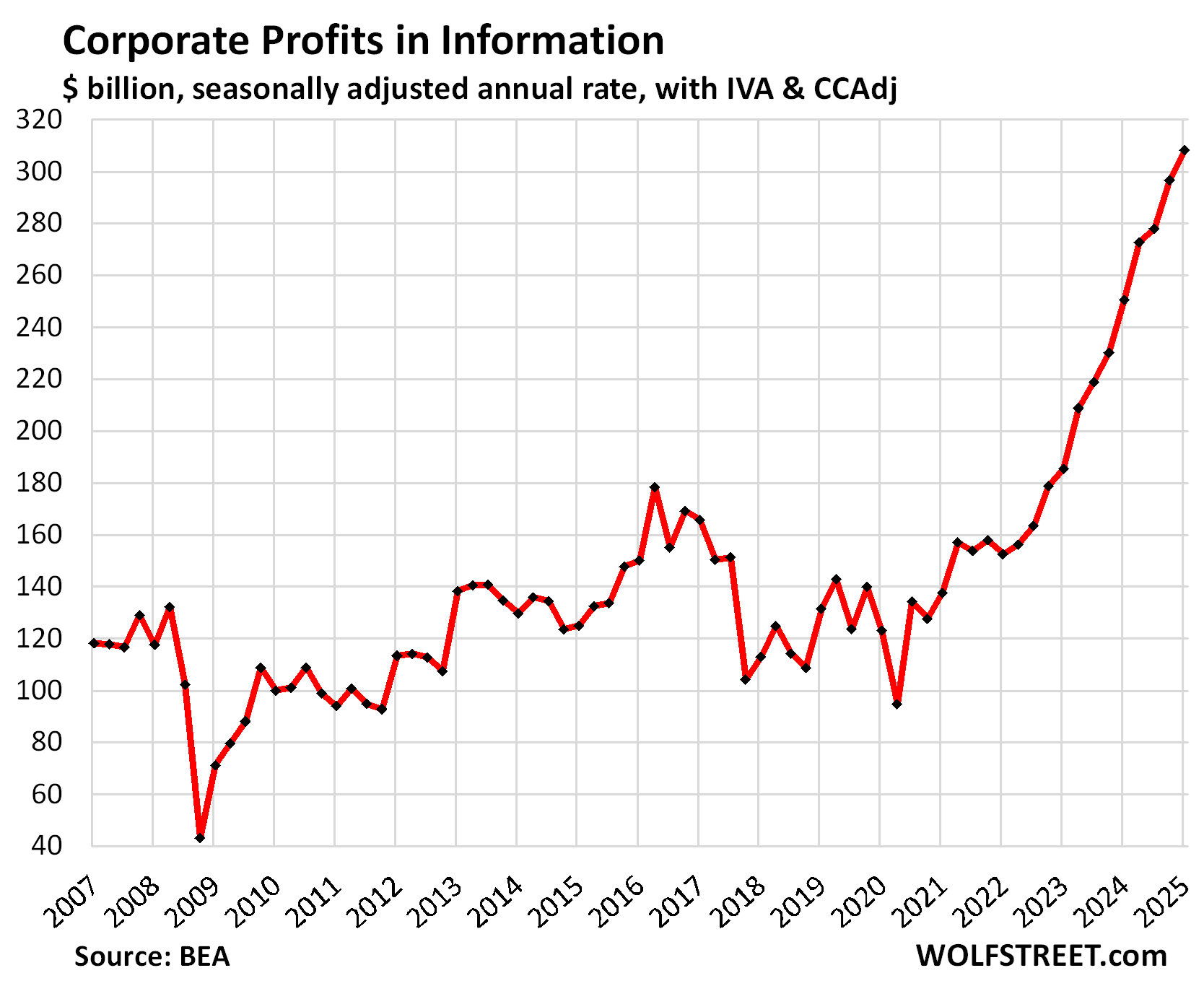
Information: Profits jumped by 3.9% in Q1 and by 27.6% year-over-year, to a seasonally adjusted annual rate of $308 billion. Since Q1 2020, profits have spiked by 150%.
The category includes businesses engaged in web search portals, data processing, data transmission, information services, software publishing, motion picture and sound recording, broadcasting including over the Internet, and telecommunications.
This is a small industry in terms of employees, but with outsized profits.
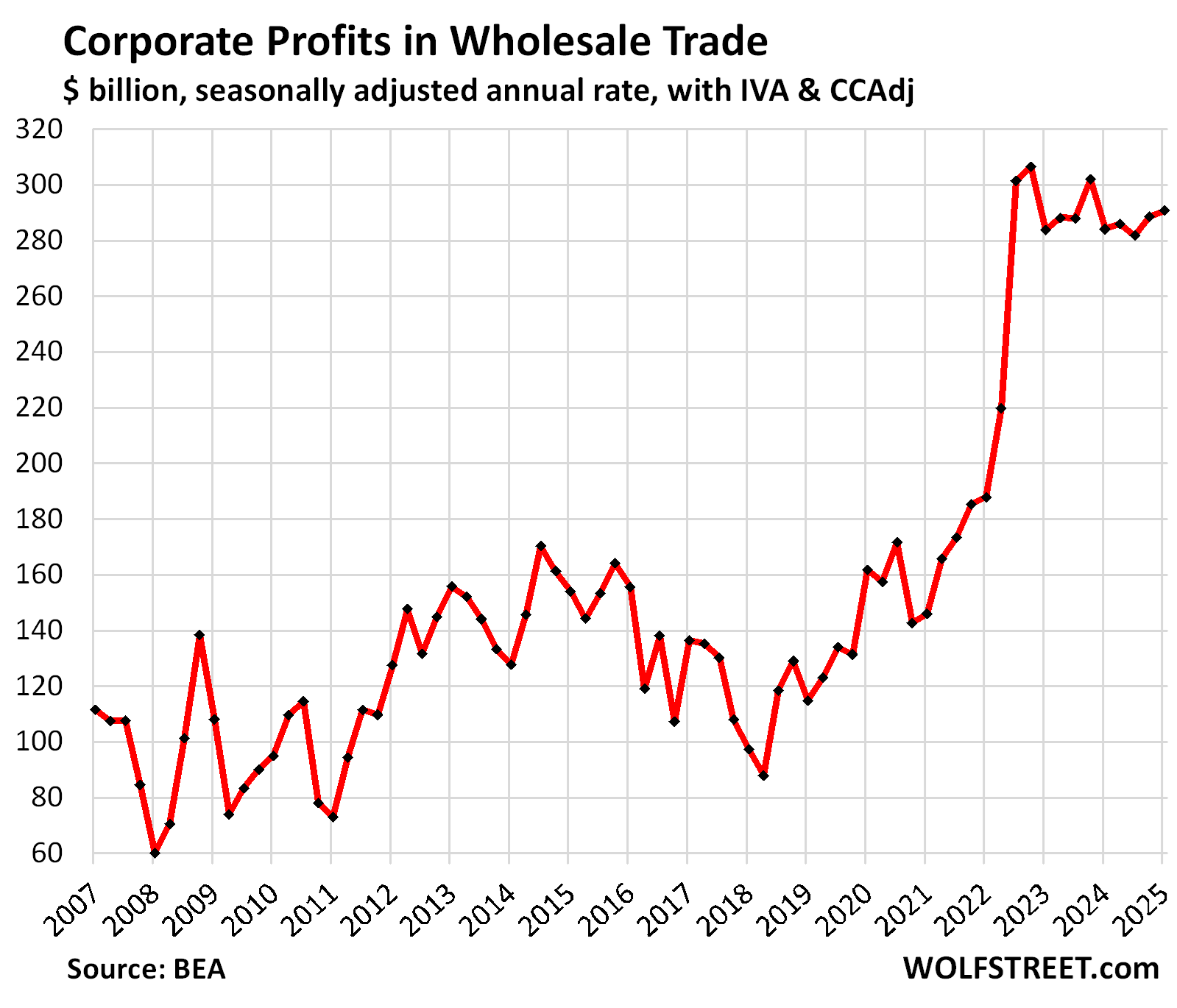
Wholesale trade: Profits rose by 0.8% in Q1, and by 2.3% year-over-year, to a seasonally adjusted annual rate of $291 billion. Since Q1 2020, profits have surged by 80%.
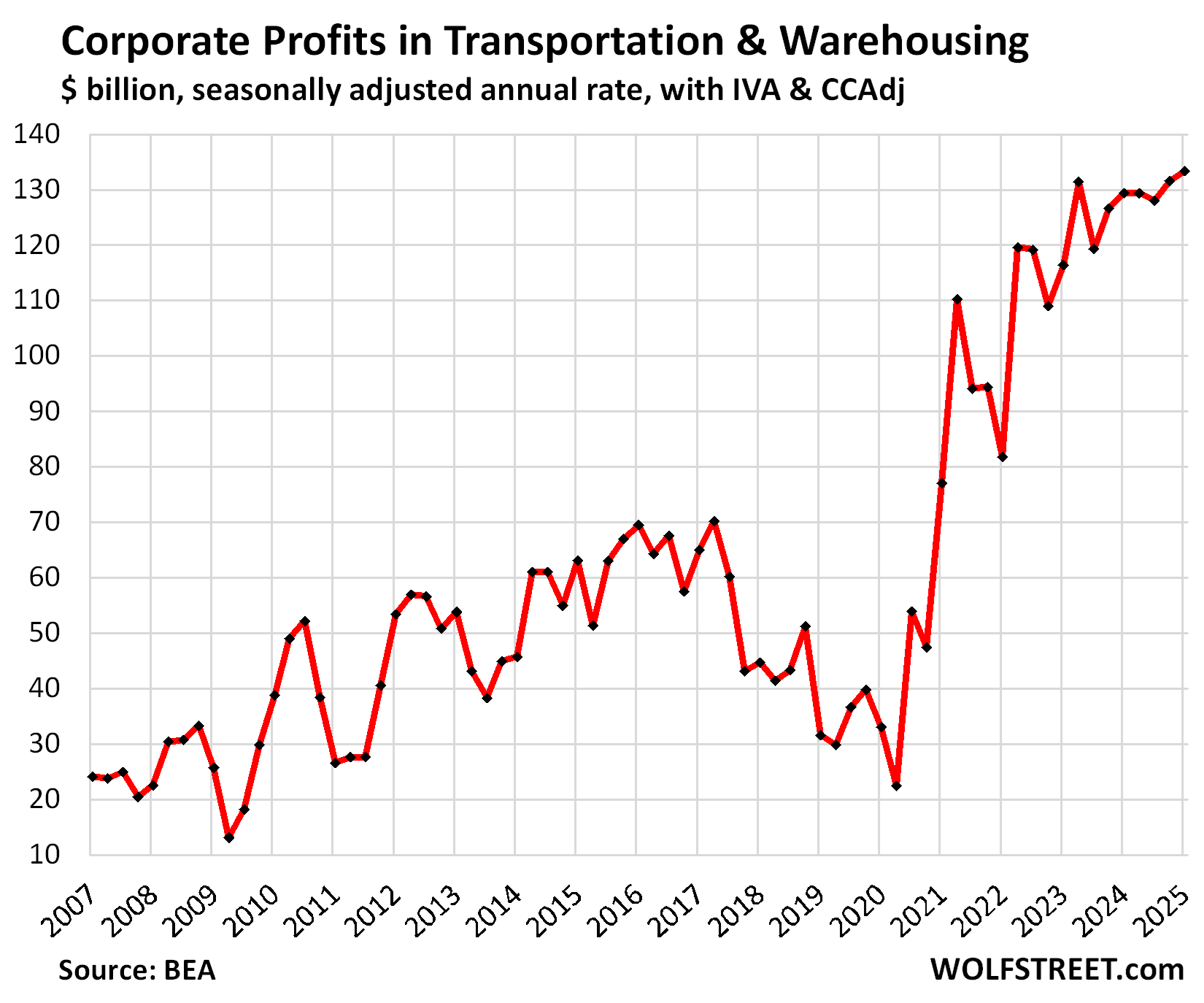
Transportation & warehousing: Profits rose by 1.4% Q1, and by 3.0% year-over-year, to a seasonally adjusted annual rate of $133 billion. Since Q1 2020, which was the low point after a long decline, profits quadrupled (+304%). From the average levels in 2016, profits doubled.
On a technical note, these pre-tax profits “from current production” have been adjusted in three ways:
- “Inventory valuation adjustment” (IVA) removes profits derived from inventory cost changes, which are more like capital gains rather than profits “from current production.”
- “Capital consumption adjustment” (CCAdj) converts the tax-return measures of depreciation to measures of consumption of fixed capital, based on current cost with consistent service lives and with empirically based depreciation schedules.
- Capital gains & dividends earned are excluded to show profits “from current production,” rather than financial gains.
Enjoy reading WOLF STREET and want to support it? You can donate. I appreciate it immensely. Click on the mug to find out how:


The post The Corporate-Profit Explosion Stalls in Q1, on the Eve of the New Tariffs appeared first on Energy News Beat.