Energy News Beat
For years, the dominant energy narrative has been a single, heavily marketed story: the world is undergoing an inevitable, morally urgent transition away from fossil fuels toward wind, solar, and battery storage. Climate activists, aligned media, and policymakers have framed this as both destiny and imperative. As David Blackmon observed in his August 2, 2026, Substack piece “The Energy Transitions That Are Really Happening,” the reality unfolding in 2026 is far different. Multiple genuine transitions are reshaping the energy landscape—none of them the one the climate industrial complex promised.
David Blackmon, Stu Turley, Dr. Tammy Nemeth, and Irina Slav will be covering this on the Energy Realities podcast from the UK, EU, and US live at 7:00 a.m. Central U.S.
One clear example Blackmon highlights is Britain’s policy-driven dismantling of its North Sea oil and gas industry. BP has put its entire North Sea business up for sale after more than six decades of production, a direct result of successive governments’ punitive windfall taxes and the Energy Profits Levy in pursuit of net-zero goals. That is a transition, but not the green one celebrated by activists. The broader global picture reinforces the same point: the real energy transition centers on rebalancing oil and gas infrastructure, hardening supply chains against geopolitical choke points, and reducing dangerous interdependencies—while the subsidy-dependent intermittency of wind, solar, and batteries faces mounting practical and fiscal limits.
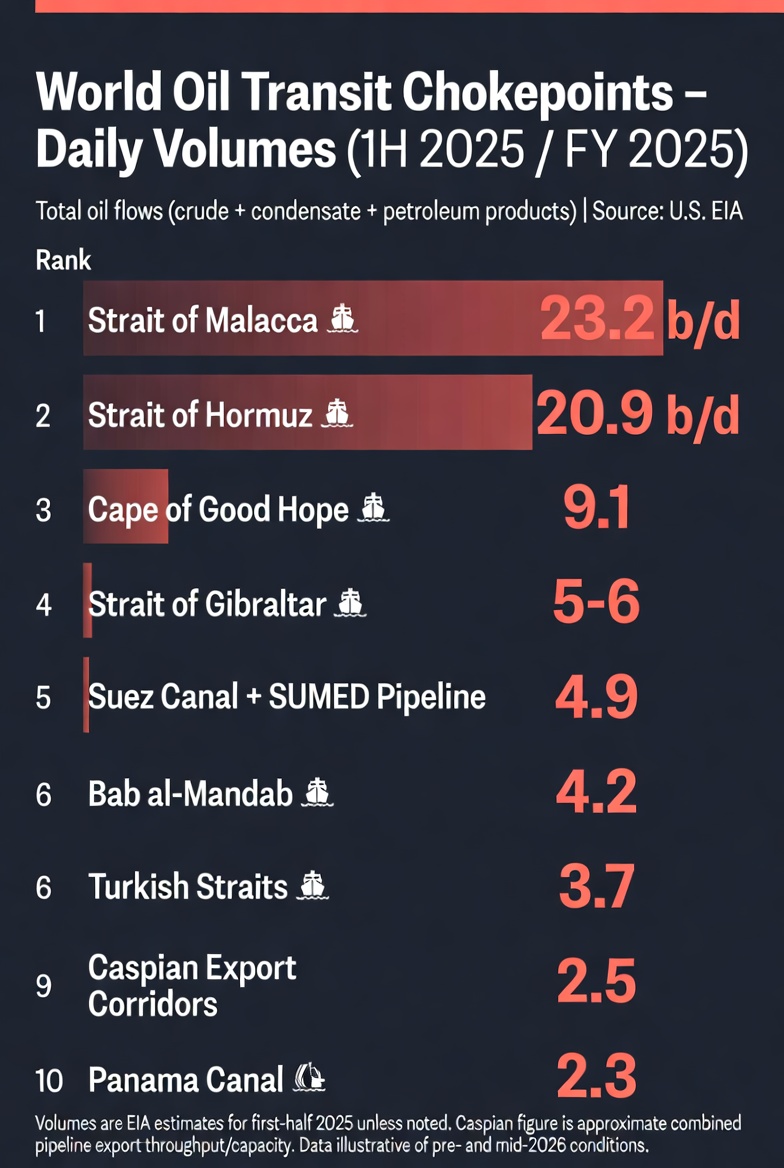
Top Oil and Gas Producers Before the Iran War—and the Workarounds That Followed
The 2026 Iran war, which began with U.S. and Israeli strikes on February 28, 2026, and involved severe disruptions to the Strait of Hormuz (a chokepoint for roughly 20% of global oil and significant LNG volumes), exposed the vulnerabilities of concentrated Middle East export routes. Pre-war production data from 2025 provide the baseline.
Crude oil production (approximate 2025 averages, million barrels per day):
- United States – 13.6
- Saudi Arabia – 9.5–10.1
- Russia – ~9.9–10.0
- Canada – ~5.0–5.1
- Iraq – ~4.4
- China – ~4.4
- Iran – ~4.0–4.2
- United Arab Emirates – ~3.8–4.0
- Brazil – ~3.9–4.0
- Kuwait – ~2.6
Natural gas production (2025, leading producers in billion cubic meters or equivalent rankings):
The United States led by a wide margin (roughly 1,000+ bcm or about 25% of global output), followed by Russia, Iran, China, Canada, Qatar, Australia, Norway, Saudi Arabia, and Algeria.
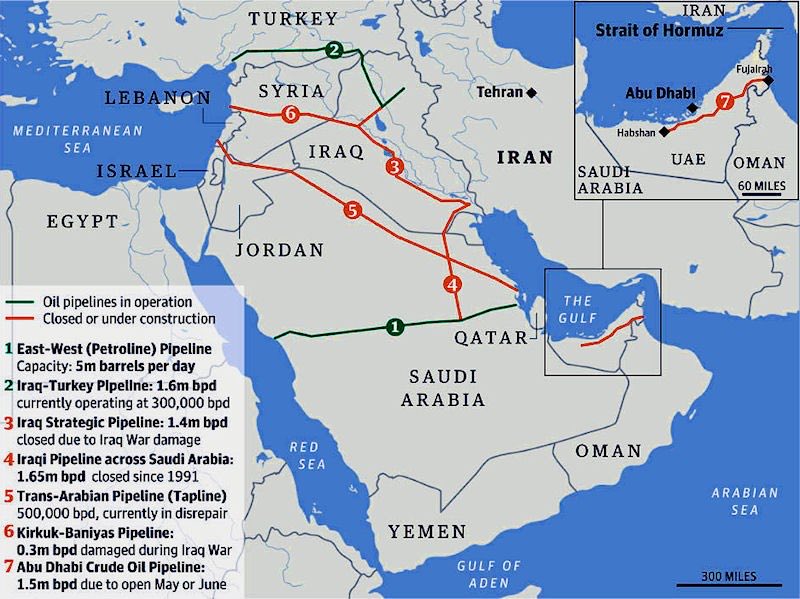
When the Strait of Hormuz effectively closed or became highly restricted for non-Iranian traffic, producers scrambled for workarounds. Saudi Arabia rapidly maximized its East-West Crude Oil Pipeline (Petoline) to full capacity of around 7 million bpd, directing flows to the Red Sea port of Yanbu and thereby bypassing Hormuz. The kingdom has since explored expansions of up to 1–2 million bpd additional capacity, potentially in coordination with neighbors.
The UAE accelerated its Habshan-Fujairah (ADCOP) pipeline (existing capacity ~1.8 million bpd) and fast-tracked a parallel West-East pipeline expected to roughly double Hormuz-bypass capacity to around 3.3–3.6 million bpd by 2027, turning Fujairah into an even more critical export hub on the Gulf of Oman.
Iraq moved to revive and expand northern routes. A one-year deal with Turkey in 2026 enables the Iraq-Türkiye pipeline to operate at up to 750,000 bpd to the Mediterranean port of Ceyhan, with ambitions for higher volumes and longer-term frameworks. Additional concepts include pipelines toward Jordan/Aqaba or revived Syrian routes.
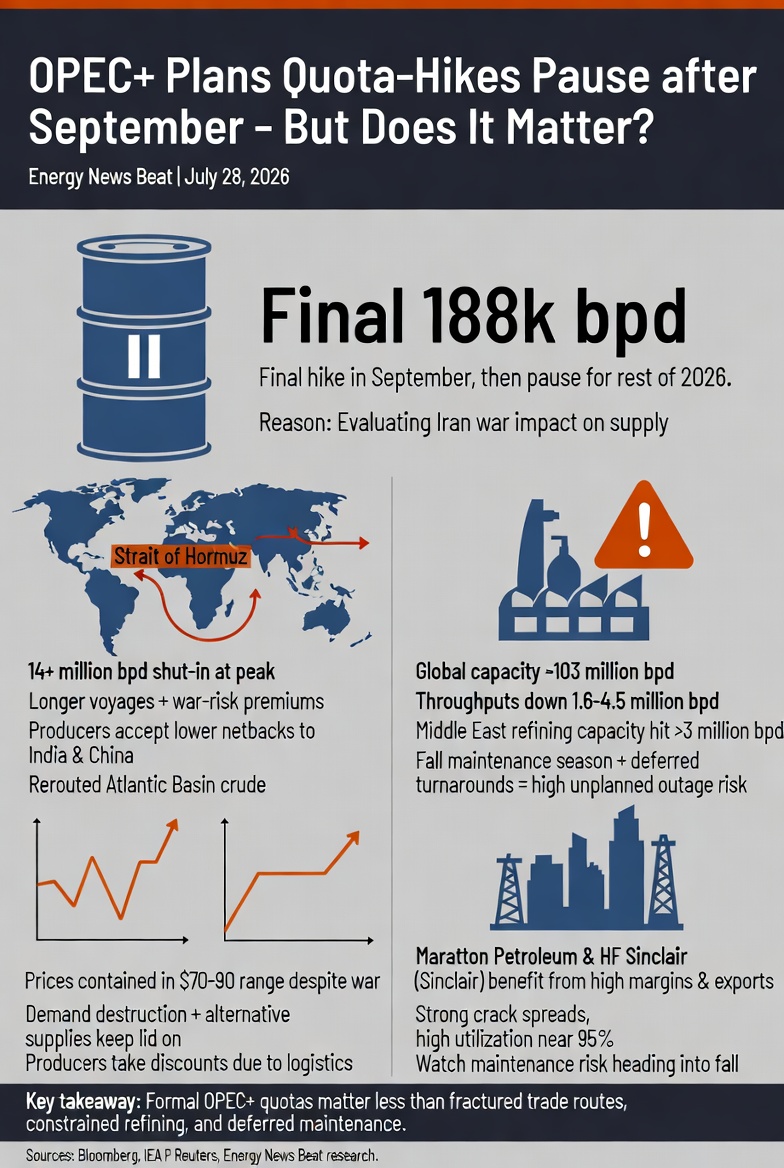
These moves—alongside continued Russian pipeline and Arctic LNG efforts, U.S. and Canadian production growth, and Brazilian offshore expansion—illustrate a deliberate rebalancing of global oil and gas infrastructure. The goal is clear: reduce reliance on single maritime choke points (Hormuz, Bab el-Mandeb, and others) and begin unwinding the geopolitical leverage that such bottlenecks confer on adversaries. Interdependence that once amplified the influence of certain regimes is being methodically diluted through diversified pipelines, alternative export terminals, and flexible seaborne options.
The LNG Space Is Transforming
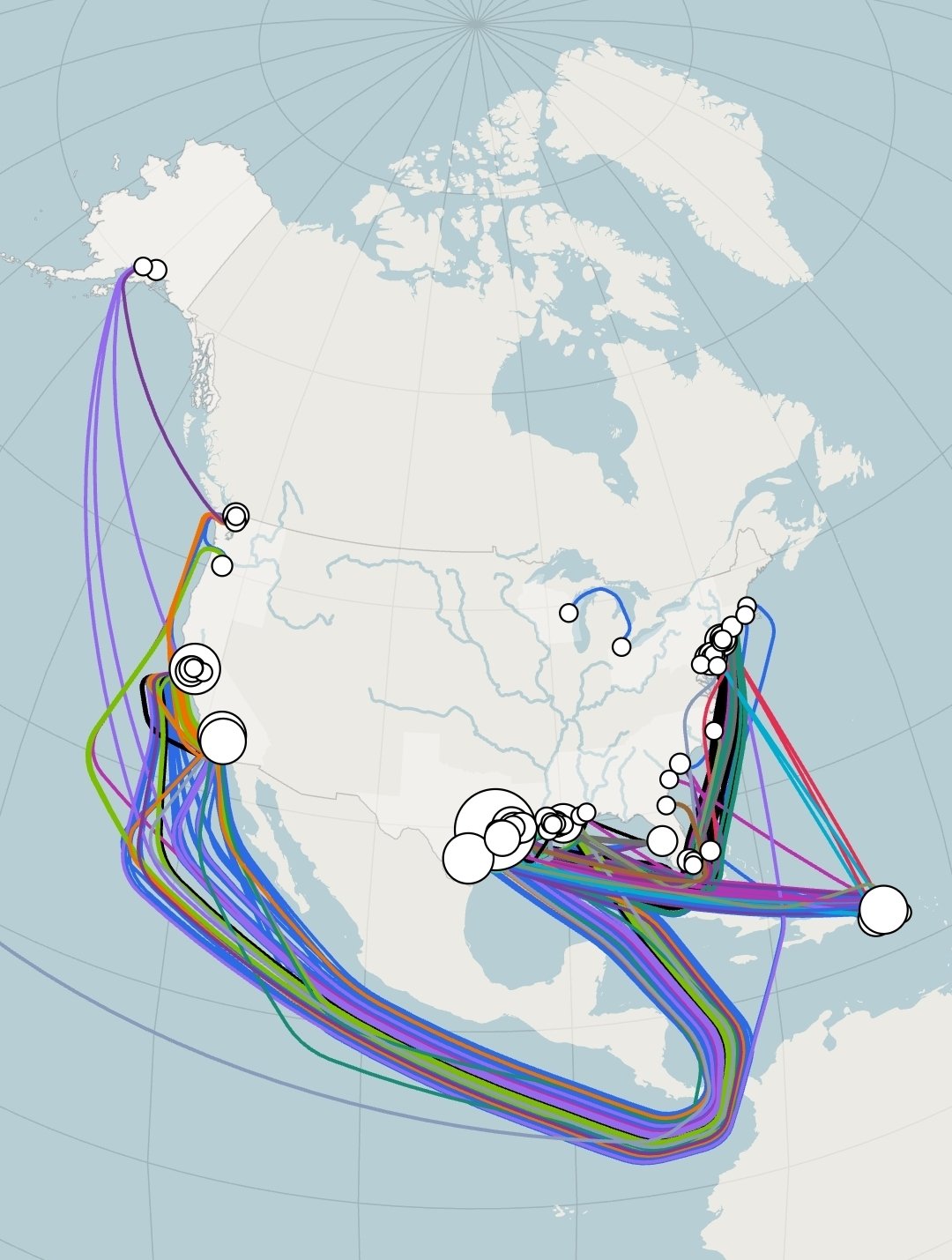
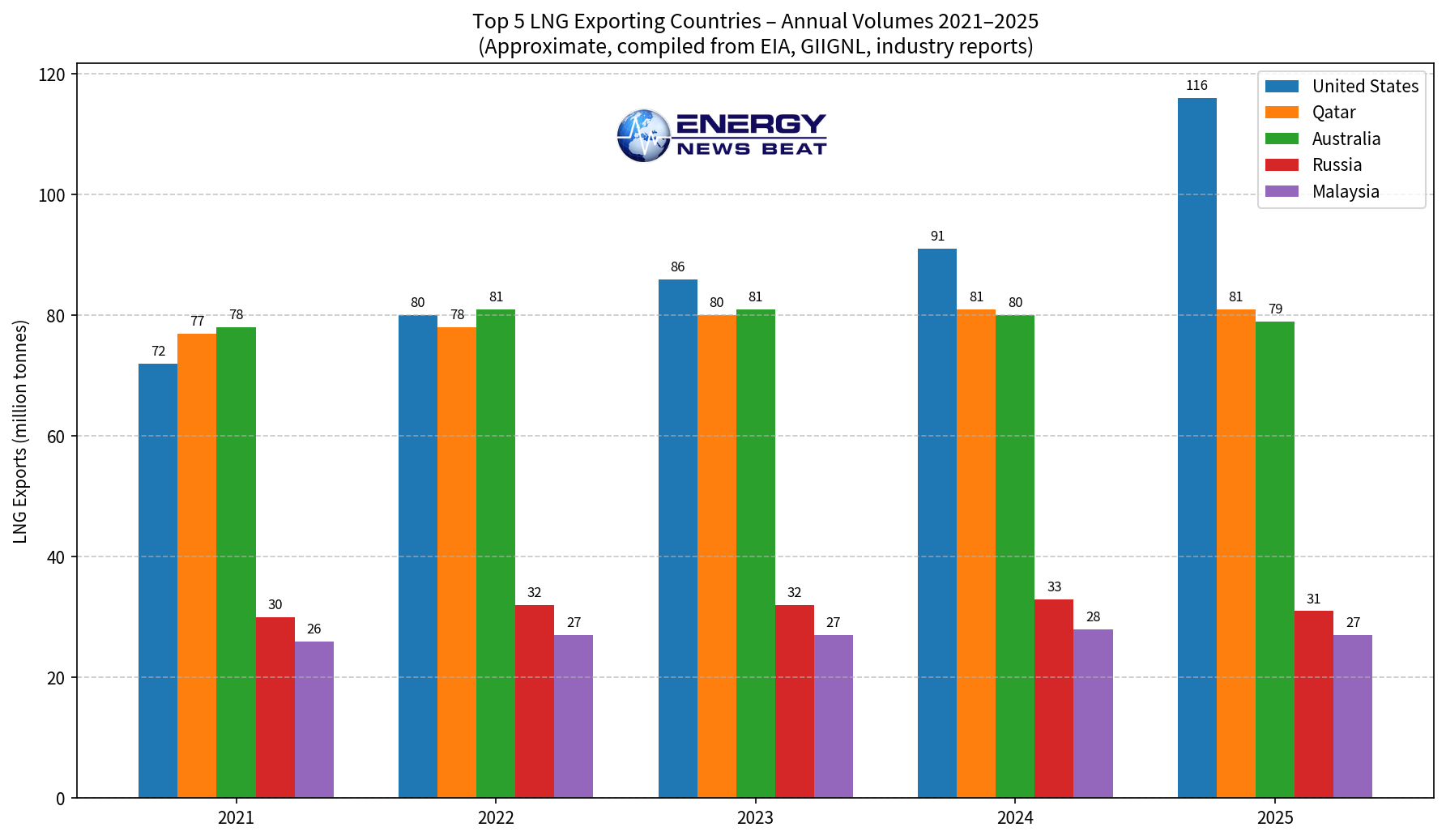
Nowhere is the shift more dramatic than in liquefied natural gas. The United States has solidified its position as the world’s leading LNG exporter, with volumes averaging more than 15–16 billion cubic feet per day in 2026 and further capacity expansions underway. U.S. LNG has already demonstrated its value as a flexible, geopolitically reliable supply that helped Europe replace much of its former Russian pipeline gas and is now filling gaps elsewhere.
Qatar, long a pillar of global LNG, suffered direct hits. Iranian strikes damaged facilities at Ras Laffan, knocking out roughly 17% of export capacity (two LNG trains and related infrastructure) for an estimated three to five years and triggering force majeure declarations. QatarEnergy responded by purchasing dozens of U.S. LNG cargoes—33 spot cargoes in 2026 alone, valued around $1 billion—to honor customer commitments in Asia and protect its reputation for reliability.
One conceptual workaround discussed involves a new natural gas pipeline from Qatar (paralleling or expanding on the existing Dolphin line) across to the UAE or Oman, feeding floating LNG (FLNG) or new liquefaction capacity on the Gulf of Oman or Arabian Sea coast, thereby avoiding Hormuz entirely. While technically feasible in principle and building on existing cross-border infrastructure, such a project would be enormously expensive, politically complex, and time-consuming—likely cost-prohibitive relative to simply buying flexible U.S. cargoes in the near term or accelerating repairs.
The broader LNG market is thus shifting toward greater U.S. dominance, more flexible destination clauses, and reduced concentration risk in the Persian Gulf. This is a genuine energy transition driven by security and market realities, not by climate targets.
A World That Cannot Rely on Wind, Solar, and Batteries Alone
Meanwhile, the intermittent technologies at the center of the activist vision continue to demonstrate their limitations. Wind, solar, and battery storage do not provide reliable baseload or dispatchable power at scale without massive ongoing subsidies, overbuild, and fossil or nuclear backup. Those subsidies are drying up—much like the rivers in Germany.
Germany has moved to scale back renewable-energy subsidies under reforms to its Renewable Energy Act, driven by soaring system costs, grid congestion from rapid solar expansion, and the need to control electricity prices that remain among Europe’s highest. Support frameworks are being redesigned so new projects receive aid only where it benefits the overall system, with the current regime set to expire at the end of 2026.
At the same time, persistent drought and heat have lowered water levels on the Rhine and other key European waterways to critically low points, disrupting barge traffic that carries fuels, chemicals, and industrial goods and adding further pressure to energy and logistics systems. The parallel is apt: just as rivers that once reliably supported industrial activity are running low, the fiscal rivers that sustained uneconomic intermittent generation are being restricted.
In short, a world that attempts to rely primarily on wind, solar, and batteries without continuous heavy subsidies discovers that the physics and economics do not cooperate. The real transition prioritizes dense, reliable, dispatchable energy sources and the infrastructure needed to deliver them securely.
The energy transition is indeed happening. It is a transition toward greater resilience, diversified pipelines and export routes, dominant flexible LNG supplies from politically stable producers, and a sober recognition that hydrocarbons remain indispensable. Climate activists may not like the map that is emerging, but it is the one the world’s producers, consumers, and security realities are drawing.
Check out the Energy News Beat Substack tomorrow and ask questions or interact.
- David Blackmon, “The Energy Transitions That Are Really Happening,” Substack, August 2, 2026: https://blackmon.substack.com/p/the-energy-transitions-that-are-really
- BP North Sea sale reporting: https://www.theguardian.com/business/2026/jul/31/bp-north-sea-oil-and-gas-business-up-for-sale
- Top crude oil producers 2025 (various compilations including EIA-aligned and Visual Capitalist/EnergyNow data): https://energynow.com/2026/05/ranked-the-top-crude-oil-producers-in-2025-visual-capitalist/; https://www.eia.gov/todayinenergy/detail.php?id=67844; https://en.wikipedia.org/wiki/List_of_countries_by_oil_extraction
- Natural gas production rankings: https://en.wikipedia.org/wiki/List_of_countries_by_natural_gas_production; https://www.worldometers.info/gas/gas-production-by-country/; https://yearbook.enerdata.net/natural-gas/world-natural-gas-production-statistics.html
- 2026 Iran war overview and energy impacts: https://en.wikipedia.org/wiki/2026_Iran_war; https://www.britannica.com/event/2026-Iran-war; https://www.reuters.com/business/energy/iran-wars-energy-impact-forces-world-pay-up-cut-consumption-2026-03-21/
- Saudi East-West pipeline: https://www.reuters.com/business/energy/saudi-arabia-considers-expansion-oil-pipeline-red-sea-sources-say-2026-07-07/; https://en.wikipedia.org/wiki/East%E2%80%93West_Crude_Oil_Pipeline
- UAE pipelines: https://www.instituteforenergyresearch.org/fossil-fuels/gas-and-oil/uae-to-double-oil-pipeline-capacity-by-2027/; https://www.kpler.com/blog/new-pipelines-bypassing-the-strait-of-hormuz-could-come-online-in-1-2-years
- Iraq-Türkiye pipeline: reporting on 2026 agreements and capacity expansions (multiple sources including CNBC and regional energy outlets)
- Qatar LNG damage and force majeure: https://www.reuters.com/business/energy/iran-attack-damage-wipes-out-17-qatars-lng-capacity-three-five-years-qatarenergy-2026-03-19/
- QatarEnergy U.S. LNG cargo purchases: https://energynow.com/2026/07/qatarenergy-buys-33-us-lng-cargoes-to-offset-hormuz-disruption/
- Conceptual Qatar gas pipeline to alternative liquefaction: https://www.grc.net/single-commentary/375 (and related Dolphin pipeline references)
- U.S. LNG export growth: https://press.spglobal.com/2026-07-16-Liquefied-Natural-Gas-Set-to-Become-United-States-2nd-Largest-Net-Export-Industry-within-Five-Years,-S-P-Global-Energy-Study-Finds; https://www.forbes.com/sites/edhirs/2026/02/24/us-lng-exports-have-changed-global-energy-markets/; U.S. Department of Energy materials on the decade of U.S. LNG leadership
- Germany renewable subsidy reforms: https://www.bloomberg.com/news/articles/2026-07-18/germany-to-slash-renewable-subsidies-as-solar-surge-tests-grids; https://www.instituteforenergyresearch.org/international-issues/germany-is-reducing-its-subsidization-of-renewables/
- German/European river drought impacts: https://www.reuters.com/commentary/reuters-open-interest/europes-next-energy-shock-is-drying-up-plain-sight-2026-07-16/
(Additional contemporaneous reporting from Reuters, CNBC, EIA, IEA, and regional energy outlets informed the synthesis of production figures, pipeline capacities, and market responses.)
The post The Energy Transition is Happening – It’s Not What the Climate Activists Wanted appeared first on Energy News Beat.