Energy News Beat
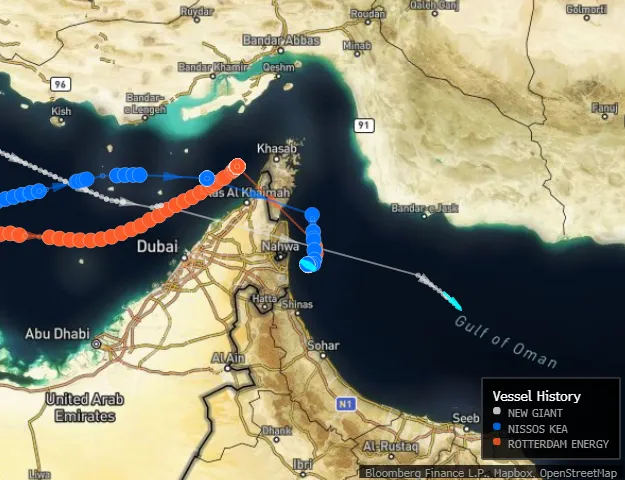
Two and a half months after the Strait of Hormuz effectively shut down amid the escalating Middle East conflict, India—the world’s third-largest crude oil importer—is grappling with a deepening energy shock that is rippling through its economy. What began as a geopolitical standoff has now cut off more than 40% of India’s crude oil flows, disrupted LNG and LPG supplies, and forced the government into urgent conservation measures while oil marketing companies (OMCs) bleed cash.
The Oil Shock: 40% of Crude Imports Vanish Overnight
Prior to the crisis, roughly 40-50% of India’s crude oil imports transited the Strait of Hormuz from Gulf producers. With shipping traffic through the chokepoint collapsing, Indian refiners lost access to millions of barrels per day almost immediately. The government reports holding 69 days of crude stocks, but the import bill has soared as buyers scramble for alternative supplies—often at premium prices—from Russia, the United States, West Africa, and other non-Hormuz routes.
LNG and LPG: Cooking Fuel and Industrial Gas Under Siege
India relies on LNG for roughly half of its natural gas needs. In 2025, average monthly LNG imports hovered around 2.08 million tonnes, with approximately 55-65% (primarily from Qatar at ~47% of total imports or 0.95 million tonnes/month, and the UAE at ~13% or 0.27 million tonnes/month) transiting the Strait of Hormuz.
Post-closure, Qatar and UAE cargoes plummeted: just 0.06 million tonnes from Qatar and 0.13 million tonnes from the UAE arrived in March-April combined. Total LNG imports fell to 1.67 million tonnes in March before partially recovering to 1.95 million tonnes in April—still down 9.3% year-on-year. India has pivoted aggressively to the United States, Oman, Nigeria, Angola, and others, but at significantly higher landed costs.
LPG—the primary cooking fuel for hundreds of millions of Indian households—faces an even sharper crisis. India imports 60% of its total LPG consumption (annual consumption ~33 million tonnes or ~90,000 tonnes per day). Of those imports, ~90% historically moved through the Strait of Hormuz, meaning roughly 54% of the country’s entire LPG supply was at risk. Imports halved in March-April (from ~2 million tonnes/month pre-crisis to ~1.1 million tonnes in March and ~0.95 million tonnes in April). Consumption has already dropped 12-16% year-on-year as households feel the pinch.
The government has responded by directing state refiners to maximize domestic LPG output (up ~30% in some cases), redirecting industrial supplies to households, and securing limited tanker passages through diplomacy. Stocks stand at 45 days, but the strain is evident.
What This Means for India’s Economy
The energy crunch is hammering multiple fronts: Import Bill and Forex Pressure: Higher prices for crude, LNG, and LPG are swelling the current-account deficit and draining foreign-exchange reserves. The rupee has plunged to a record low (around ₹95.74-95.96 per USD).
OMC Losses: To shield consumers, the government cut taxes on gasoline and diesel and kept pump prices artificially low. OMCs are now absorbing losses of up to ₹1,000 crore per day. Oil Minister Hardeep Singh Puri called this “unsustainable” in the long run.
Inflation and Growth: April inflation accelerated. Analysts warn of further rises if the crisis drags on. BMI (Fitch Group) slashed India’s GDP growth forecast for FY 2026/27 to 6.7% from 7.7% the previous year, citing the oil shock.
Capital Flight: Foreign investors pulled more than $20 billion from Indian equities in the first four months of 2026—already exceeding last year’s full-year record.
Prime Minister Narendra Modi personally urged citizens this weekend to conserve fuel—use public transport, carpool, reduce non-essential foreign travel, and cut gold purchases—to ease pressure on reserves. “Measures such as these will help the nation conserve energy, save on the energy import bill and overcome the challenges arising out of the serious military conflict,” Minister Puri echoed.
Economists like Dhiraj Nim of ANZ Bank predict retail fuel price hikes “sooner than later” in Q2, while RBI Governor Sanjay Malhotra has signaled possible monetary-policy intervention if the blockade persists.
Looking Ahead
India has demonstrated resilience by diversifying crude sources (Russia now a top supplier) and securing some LPG and LNG cargoes through alternate routes and diplomacy. Yet the crisis underscores a core vulnerability: heavy dependence on a single chokepoint for critical fuels that power everything from cooking stoves to power plants and factories. As long as the Strait of Hormuz remains closed, India’s energy security—and economic momentum—will remain on a knife-edge. The coming weeks will test whether conservation, diversification, and strategic diplomacy can blunt the worst effects or whether painful price adjustments and slower growth become the new reality.
- Original OilPrice.com article (May 14, 2026): “India’s Oil Crisis Deepens as Hormuz Remains Shut” by Tsvetana Paraskova – https://oilprice.com/Energy/Energy-General/Indias-Oil-Crisis-Deepens-as-Hormuz-Remains-Shut.html
- Indian Express: “How India diversified its LNG import basket after crunch…” – https://indianexpress.com/article/explained/explained-economics/india-lng-imports-hormuz-closure-qatar-supply-disruption-10683846/
- PIB/Government of India release on LPG imports – https://www.pib.gov.in/PressReleasePage.aspx?PRID=2238525
- Additional data from Kpler, IEA, Reuters, The Hindu BusinessLine, and Forbes India reports on LNG/LPG volumes and economic impacts (March-May 2026).
- BMI/Fitch GDP forecast and ANZ economist commentary referenced in OilPrice.com and contemporaneous coverage.
Energy News Beat will continue monitoring developments. Stay tuned for updates on India’s energy transition and global supply shifts.
The post India’s Oil Crisis as Hormuz is Still Closed appeared first on Energy News Beat.